Spray Foam Insulation Langley

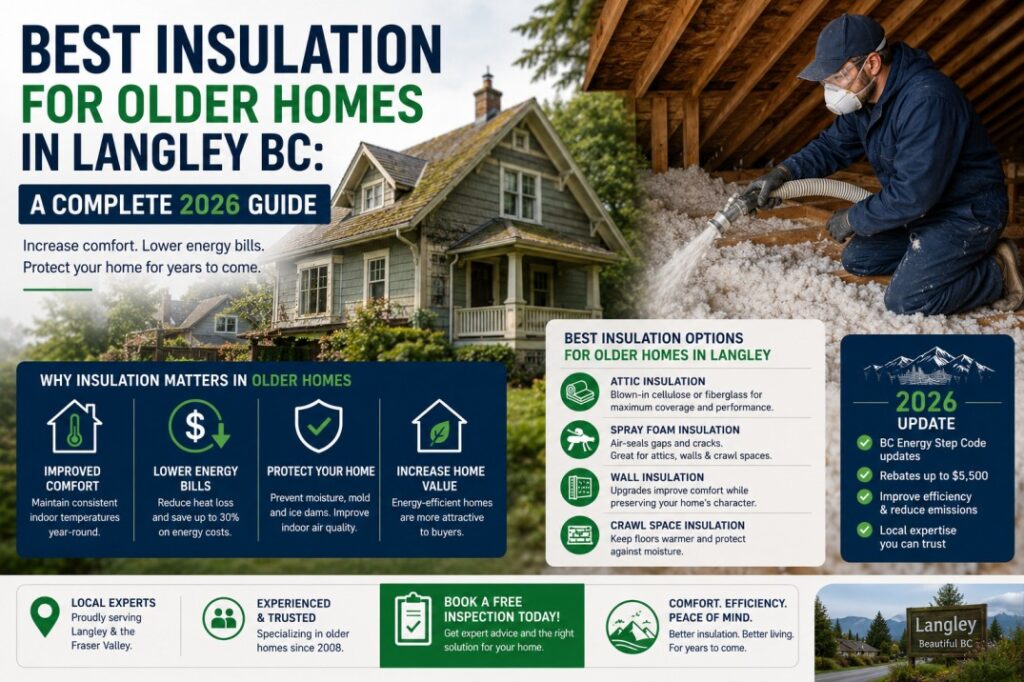
Best Insulation for Older Homes in Langley BC: A Complete 2026 Guide

Best Insulation for Older Homes in Langley BC: A Complete 2026 Guide

Best Insulation for Older Homes in Langley BC: A Complete 2026 Guide The short answer: For most older homes in Langley BC, the best insulation combination is blown-in fibreglass to R-60 in the attic with air sealing included, closed-cell spray foam in the crawlspace and rim joists, and dense-pack blown-in in closed exterior wall cavities. The correct approach in each zone depends on your home’s construction era — and the starting point that matters most is knowing what you already have. Langley’s residential housing stock spans more than six decades of construction history — from post-war bungalows in Murrayville and Aldergrove to 1970s ranch-style homes in Brookswood, 1980s developments in Walnut Grove, and 1990s builds in Willoughby. Each era has its own insulation profile — its own materials, its own installation standards, and its own specific failure modes that develop over time in BC’s damp climate. If you own an older home in Langley and you are trying to understand what insulation you currently have, what you actually need, and what the best upgrade path looks like for your specific home, this guide gives you the honest, era-specific answers. Why Older Homes in Langley BC Lose More Heat — and Why It Matters Now Older homes in Langley lose significantly more heat than current building science considers acceptable — not because they were poorly built by the standards of their time, but because those standards have changed dramatically. The BC Building Code R-value requirements that apply to Langley homes today are substantially higher than anything that was required when most of the Fraser Valley’s existing housing stock was constructed. The practical consequence is that a 1985 Langley home is spending considerably more on heating every month than a modern home of equivalent size — and most of that difference is not the heating system, it is the insulation. Every dollar spent heating that home is fighting a losing battle against heat loss through an attic that should be at R-60 but sits at R-20, a crawlspace with no insulation at all, and 2×4 walls with original R-12 batts that have settled and compressed over 40 years. The better news is that the solutions are well understood, the materials are excellent, BC Hydro and FortisBC rebates of up to $5,500 offset a significant portion of the cost, and the payback period on a properly executed insulation upgrade in an older Langley home is typically three to five years before rebates and considerably shorter after. Insulation by Era: What Your Langley Home Has and What It Needs Pre-1977 Langley Homes — The Highest Priority Cases Langley homes built before 1977 represent the most significant insulation deficiency in the Fraser Valley housing stock — and they are the cases where a proper upgrade delivers the most dramatic improvement. What these homes typically have: What they need: In the attic, blown-in fibreglass insulation from near-zero to R-60 is the single highest-impact upgrade available to a pre-1977 Langley home. Air sealing of every ceiling bypass location before the blown-in goes in is essential — because these homes were built with no consideration for airtightness, and the gap between a properly sealed ceiling and an unsealed one in a pre-1977 home is among the largest in the housing stock. For the walls, dense-pack blown-in insulation through small drilled access holes is the most practical approach for bringing near-empty 2×4 cavities to R-13 without demolition. For a pre-1977 Langley home with no wall insulation, this upgrade delivers immediate and dramatic improvement in wall surface temperature, draft reduction, and room-to-room comfort. For the crawlspace, closed-cell spray foam on crawlspace walls and rim joists combined with a code-compliant vapour barrier across the crawlspace floor is the complete system approach — addressing thermal loss, moisture, and the cold floor conditions that are endemic in this housing era. 1977–1990 Langley Homes — Below Code, But Not Empty The late 1970s through the 1980s represent the most common construction era in Langley — and these homes typically have some insulation but nowhere near enough by current standards. What these homes typically have: What they need: The attic is almost always the starting point for 1977–1990 Langley homes. An existing attic at R-12 to R-20 is a strong candidate for a top-up to R-60 — adding blown-in fibreglass over the existing material without removal, provided the existing insulation is dry, free of mold, and free of pest contamination. Our detailed guide on attic insulation top up in Langley BC covers exactly how to assess whether a top-up or full replacement is correct for your specific attic. For 1977–1990 crawlspaces with fibreglass batts in floor joists, replacement with spray foam on the crawlspace walls is the recommended approach rather than adding to the floor joist batts. As we covered in the insulation and mold prevention guide for Langley BC, fibreglass batts in Fraser Valley crawlspaces absorb ground moisture over time and hold it against floor joists — a problem that spray foam on the walls, combined with a vapour barrier on the floor, eliminates at the source. For the walls, the original R-12 batts in 2×4 framing have typically settled to less than R-9 in real-world conditions after 35 to 45 years of service. A dense-pack blown-in top-up through small access holes can restore full cavity density and bring the assembly back to R-13 to R-15 — a meaningful improvement over the current settled state, at a cost and disruption level that is accessible for most Langley homeowners. 1990–2000 Langley Homes — Closer But Still Short Langley homes built in the 1990s are closer to current standards but still fall short of what is now required — and the specific deficiencies are more targeted than in earlier eras. What these homes typically have: What they need: For 1990s Langley homes, the attic top-up from R-20 to R-32 up to R-60 remains the highest-priority upgrade — and it is also the most straightforward and cost-effective, because the existing insulation in most 1990s attics is

Best Insulation for Older Homes in Langley BC: A Complete 2026 Guide Read More »
Spray Foam Insulation in Existing Walls: What Langley Homeowners Need to Know

Spray Foam Insulation in Existing Walls: What Langley Homeowners Need to Know Can You Add Spray Foam Insulation to Existing Walls in Langley? If your home in Langley feels drafty in winter or stuffy in summer despite having older insulation, your walls may be the problem. Most homeowners assume that upgrading wall insulation means tearing out drywall — and stop there. The good news is that professional spray foam insulation installers can often upgrade your existing walls without a full-scale renovation. Langley’s climate is unique. Wet, cool winters and warm, humid summers put constant pressure on a home’s thermal envelope. Walls that were insulated with fibreglass batts 20 or 30 years ago were never designed to handle today’s energy demands. That’s where modern spray foam insulation steps in — and why so many local homeowners searching for “spray foam insulation in existing walls near me” are discovering it’s far more accessible than they thought. If you’re also evaluating other options, our guide to top insulation upgrades for Langley homes is a great place to start. Why Existing Walls Are Often the Weakest Link Most Langley homes lose a significant portion of their heat through poorly sealed wall cavities. Fibreglass batt insulation, while still common, leaves gaps around electrical boxes, plumbing runs, and framing irregularities. Air moves freely through these gaps, creating the drafts and cold spots that make rooms uncomfortable no matter how high you set the thermostat. Spray foam insulation works differently. When applied by trained spray foam insulation contractors, it expands on contact to fill every crack, gap, and void inside a wall cavity. It simultaneously insulates and air-seals in a single application — something no other insulation type can do as effectively. For Langley homeowners dealing with older construction or poorly performing walls, this makes spray foam the best spray foam insulation solution available. To understand how it compares to other materials, see our full breakdown of home insulation options in Langley, BC. How Spray Foam Gets Into Existing Walls (Without Tearing Them Down) This is the question most homeowners ask first. The process is called injection foam insulation, and it’s one of the most popular services offered by spray foam insulation companies in Langley today. Here is how it works: Step 1 – Professional Assessment A certified spray foam insulation installer inspects your home to identify which walls are under-insulated. Thermal imaging or probe testing confirms where the gaps are. For a broader picture of your home’s energy performance, this assessment often covers the attic as well — learn more about what that involves on our attic insulation Langley page. Step 2 – Small Access Holes Technicians drill small holes — typically two to three inches in diameter — either through the exterior siding or interior drywall, depending on your home’s construction and your preference. Holes are spaced between each wall stud bay. Step 3 – Foam Injection Using specialized equipment, the installer injects open-cell or closed-cell spray foam into each cavity. The foam expands to fill the entire stud bay, sealing every air gap from top to bottom. Step 4 – Patch and Finish Once the foam has fully cured, the access holes are patched and finished. If holes were drilled through siding, new plugs are installed and painted to match. Most homeowners can barely tell the work was done. The entire process for an average Langley home can be completed in one to two days, with minimal disruption to daily life. Spray Foam Insulation R-Value: What to Expect in Your Walls Understanding the R-value for spray foam insulation in existing walls helps you set realistic expectations and choose the right product for your home. Open-Cell Spray Foam delivers an R-value of approximately R-3.5 to R-4 per inch. It’s softer, expands aggressively to fill every corner, and is well-suited to most wall cavities in Langley residential homes. It also provides excellent sound dampening — a bonus for homes near busy roads or neighbours. If acoustic performance is a priority, our soundproofing insulation page has more details on dedicated solutions. Closed-Cell Spray Foam delivers a significantly higher R-value of R-6 to R-7 per inch. It’s denser, acts as its own vapour barrier, and adds structural rigidity to the wall assembly. For walls in areas prone to moisture — such as basement walls or north-facing exterior walls — closed-cell is often the recommended choice by experienced spray foam insulation contractors. If your basement or crawlspace also needs attention, explore our basement and crawlspace insulation services. In a standard 2×4 stud wall (3.5 inches deep), open-cell foam will reach approximately R-13, while closed-cell foam can achieve R-21 or higher in the same space. For Langley’s climate zone, these R values for spray foam insulation easily meet or exceed BC Building Code minimums. For a deeper look at R-values specific to Langley conditions, our spray foam insulation Langley guide covers this in full detail. Spray Foam Insulation Cost for Wall Projects in Langley Wall insulation projects are priced based on the total area being treated, the type of foam selected, and the accessibility of the wall cavities. In the Lower Mainland and Fraser Valley, homeowners can typically expect: These figures reflect professional installation by certified spray foam insulation installers using commercial-grade equipment. While spray foam insulation cost is higher upfront than standard fibreglass, the energy savings over time are substantial. Homeowners who properly air-seal and insulate their walls often see heating and cooling costs drop by 20 to 30 percent annually. Additionally, BC Hydro, FortisBC, and CleanBC rebate programs may help offset your project cost. Eligible homeowners can access up to $5,500 in rebates when combining wall insulation with other qualifying energy upgrades. Visit our insulation rebates page to see current programs and whether your project qualifies. A knowledgeable spray foam insulation company near you — like Western Insulation — can confirm your eligibility and handle all the paperwork. You can also read how other Langley homeowners have maximised savings on our attic insulation rebate Langley BC guide.

Spray Foam Insulation in Existing Walls: What Langley Homeowners Need to Know Read More »

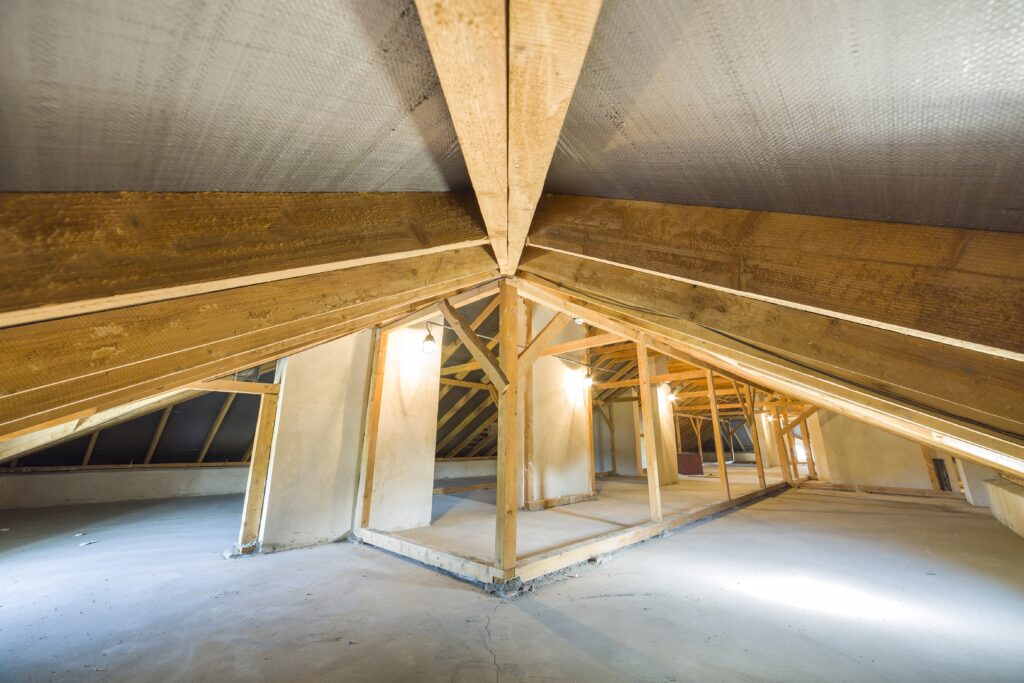
Attic of a building with wooden beams of a roof structure.

How Attic Insulation Can Transform Your Langley Home’s Comfort and Efficiency

How Attic Insulation Can Transform Your Langley Home’s Comfort and Efficiency Imagine a home where every corner is warm during the icy chill of winter and refreshingly cool in the summer’s peak. Sounds perfect, doesn’t it? That’s not a dream but a reality you can achieve with the right attic insulation. In Langley, where temperatures can swing dramatically, your home’s comfort and efficiency can be significantly enhanced by focusing on this often-overlooked area. Attic insulation might not be the first thing you think of when upgrading your home, but it has the potential to transform your living space entirely. Ever wondered why your energy bills skyrocket during the winter months despite your best efforts to conserve heat? Key Takeaways Understanding the Importance of Attic Insulation Attic insulation is more than just a layer of material; it acts as a barrier between your home and the external environment. During the colder months, it keeps the warmth generated by your heating system from escaping through the roof. Conversely, in the summer, it prevents the searing heat from seeping into your living space. In essence, attic insulation is crucial for maintaining a consistent indoor temperature all year round. A well-insulated attic can significantly reduce your heating costs. By minimising the amount of heat that escapes in winter, your heating system doesn’t have to work as hard, leading to lower energy bills. It’s a straightforward equation: the better your home retains heat, the less energy you need to maintain a comfortable temperature. This is especially important in Langley, where winters can be harsh. But it’s not just about saving money. Proper attic insulation also helps prevent moisture build-up. Moisture can lead to a host of problems, from mould growth to structural damage. By effectively insulating your attic, you create a barrier that prevents warm air from meeting cold surfaces, where condensation can occur. Comfort is another key aspect that attic insulation addresses. A well-insulated attic ensures that your home remains at a stable temperature, eliminating cold drafts and hot spots. Everyone loves a cosy home, and insulation plays a pivotal role in achieving that comfort level. Finally, improving your home’s energy efficiency is a wise investment. Not only does it enhance insulation performance, but it also contributes to a more sustainable environment. With rising energy costs, making your home more efficient is both economically and environmentally beneficial. Types of Insulation for Your Attic Choosing the right type of insulation for your attic can be a game-changer. Each option offers distinct advantages, tailored to fit various needs and preferences. Let’s dive into the most popular types and explore their unique benefits. Fibreglass insulation, often found in the form of batts or rolls, is a popular choice for many homeowners. Known for its affordability and effectiveness, it provides excellent thermal insulation while being relatively easy to install. Fibreglass batts are particularly useful for covering large areas and can be a DIY project for those who enjoy tackling home improvements themselves. Cellulose insulation, made from recycled paper products, stands out for its eco-friendly properties. It’s treated to resist fire and pests, making it a safe and sustainable choice. Blown-in attic insulation is a common method for installing cellulose, allowing it to fill in gaps and crevices effectively, enhancing air sealing capabilities. Spray foam insulation is another option, providing superior air sealing and insulating properties. It expands upon application, filling every nook and cranny, thus creating an airtight barrier that significantly reduces energy loss. While it can be more expensive, the energy savings over time can justify the initial investment. Mineral wool insulation is known for its excellent fire-resistant qualities. It’s made from volcanic rock and recycled steel slag, offering both thermal and sound insulation. This type of insulation is ideal for homeowners who prioritise safety and noise reduction. Each insulation type has its considerations, so it’s essential to weigh the pros and cons based on your specific needs. Whether you’re interested in eco-friendly materials or prioritising air sealing, there’s an insulation option tailored to your requirements. How Proper Attic Insulation Boosts Energy Efficiency One of the most compelling reasons to insulate your attic is the boost in energy efficiency it provides. Proper insulation minimises heat loss during the colder months, keeping your home warmer without over-relying on your heating system. This translates directly to lower energy bills, a welcome relief for any homeowner. Improved insulation efficiency doesn’t just lower costs; it enhances the performance of your HVAC system. When your home retains heat better, the heating system doesn’t have to work as hard, prolonging its lifespan and reducing maintenance needs. It’s a win-win situation that benefits both your wallet and your home’s infrastructure. Consistent indoor temperatures are another significant advantage. Proper attic insulation means fewer fluctuations in your home’s temperature, leading to increased comfort. It’s not just about warmth in winter; the same principle applies in summer, where insulation helps keep your home cool. Homeowners who invest in quality insulation often notice a difference in their energy consumption quickly. The initial investment may seem steep, but the long-term savings and improved comfort levels make it an attractive proposition. Exploring Eco-Friendly Insulation Options In today’s world, many homeowners are leaning towards sustainable solutions, and insulation is no exception. Eco-friendly insulation options not only reduce your carbon footprint but often come with additional benefits like energy-saving rebates. Cellulose insulation is a standout eco-friendly option. Made from recycled materials, it offers excellent thermal and sound insulation properties. It’s an environmentally conscious choice that doesn’t compromise on performance. Sheep’s wool insulation provides natural and sustainable benefits. It’s a renewable resource with excellent thermal properties and is biodegradable, making it a top choice for eco-conscious homeowners. Cork insulation is another renewable option, known for its exceptional thermal properties. It’s harvested without harming the tree, making it a sustainable choice. Plus, cork is naturally resistant to moisture and pests. Choosing sustainable materials for your insulation not only reflects a commitment to the environment but can also be financially rewarding. Many regions offer

How Attic Insulation Can Transform Your Langley Home’s Comfort and Efficiency Read More »

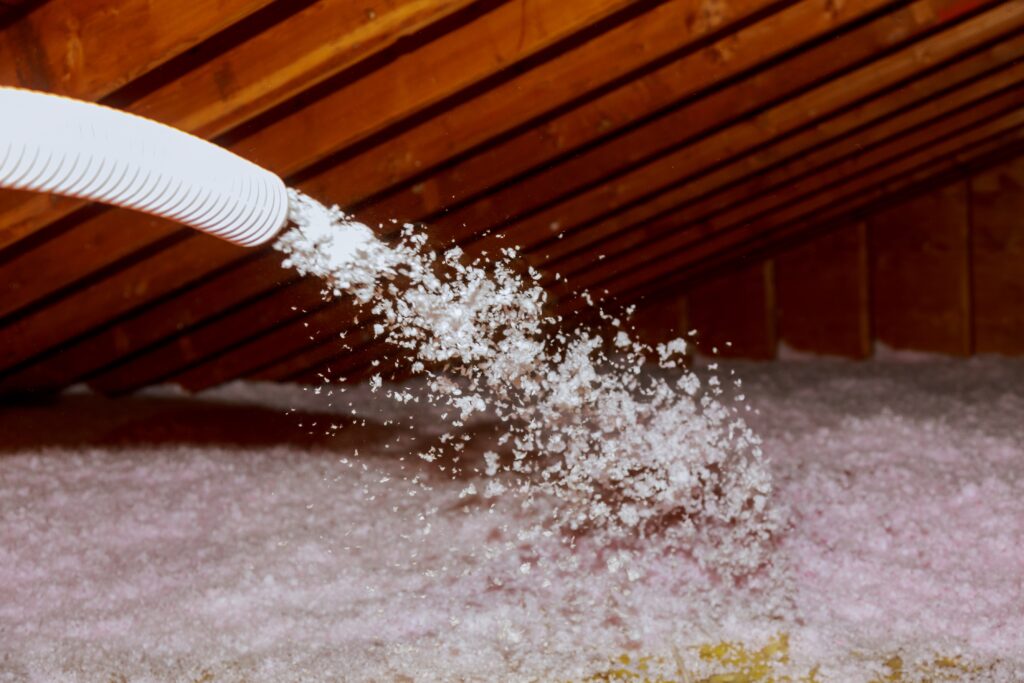
Spraying Blown Fiberglass

The Ultimate Guide to Spray Foam Insulation in Langley: Costs, R-Values, and Energy Savings

The Ultimate Guide to Spray Foam Insulation in Langley: Costs, R-Values, and Energy Savings When it comes to protecting your home from the damp winters and humid summers of the Fraser Valley, not all insulation is created equal. If you are noticing cold drafts in your living room or skyrocketing BC Hydro bills, it may be time to look into the best spray foam insulation solutions available. At Western Insulation, we have spent over 25 years helping Langley homeowners transform their properties into airtight, energy-efficient sanctuaries. In this guide, we’ll break down everything you need to know about spray foam insulation, from the technical spray foam insulation R-value to the actual spray foam insulation cost in today’s market. What is Spray Foam Insulation? If you’ve been searching for “what is spray foam insulation,” the simplest answer is that it is a chemical product (polyurethane) that expands upon application. Unlike traditional fiberglass batts that leave small gaps, spray foam expands up to 100 times its liquid volume. This expansion allows spray foam insulation installers to seal every tiny crack, crevice, and rim joist, creating a continuous air barrier. For Langley residents, this means no more “stack effect”—where warm air escapes through the attic while drawing cold, damp air in through the crawlspace. Understanding Spray Foam Insulation R-Value One of the most frequent questions we get as spray foam insulation contractors is about the “R-value.” Simply put, R-value measures a material’s resistance to heat flow. The higher the number, the better the insulation. By choosing the right R-value, you can meet or exceed the BC Building Code requirements while using less space than traditional materials. Spray Foam Insulation Cost in Langley Many homeowners ask, “Is the spray foam insulation cost worth it?” While the upfront investment for spray foam insulation companies is higher than blown-in cellulose or fiberglass, the long-term ROI is unmatched. In the Lower Mainland, you can expect to pay anywhere from $1.50 to $4.50 per square foot, depending on the thickness required and whether you choose open or closed-cell foam. However, when you factor in the up to 40% reduction in monthly energy bills and the current BC Hydro and FortisBC rebates (which can reach up to $5,500 for whole-home upgrades), the system often pays for itself within 3 to 5 years. Key Applications: Where Do You Need It Most? 1. Attic Spray Foam Insulation The attic is the primary source of heat loss in most Langley homes. Attic spray foam insulation applied to the underside of the roof deck (hot roof design) can eliminate ice dams in the winter and keep your upper floors significantly cooler during those July heatwaves. 2. Spray Foam Insulation in Existing Walls Are you tired of “cold spots” in your home? We often specialize in spray foam insulation in existing walls near me. By using specialized injection techniques or applying foam during a renovation, we can seal the building envelope without a complete tear-down. 3. Basements and Crawlspaces Langley’s high water table makes moisture a constant threat. Closed-cell spray foam is the only insulation that won’t sag or hold water if a minor leak occurs, preventing the growth of mold and mildew. Why Choose Western Insulation as Your Spray Foam Company? If you are searching for “spray foam insulation contractors near me” or a “spray foam insulation company near me,” experience matters. Spray foam is a science; if the chemical mix or temperature is off by even a few degrees, the insulation won’t cure properly. The Western Insulation Advantage: Ready to Upgrade Your Home? Stop searching for “spray foam insulation companies near me” and start working with the experts. Whether you are building a new home in Willoughby or retrofitting a heritage house in Fort Langley, Western Insulation has the tools and expertise to get the job done right. Contact Western Insulation today for a free, no-obligation assessment of your Langley home. Let us show you how the right spray foam insulation can save you money and improve your family’s comfort for decades to come. Frequently Asked Questions (FAQ) Is spray foam insulation safe? Yes. When installed by professional spray foam insulation companies, the product is completely safe. We follow strict ventilation protocols, and once the foam is cured (usually within 24 hours), it becomes an inert, non-toxic material. Can I do DIY spray foam? While small kits exist, for whole-home projects like attic spray foam insulation, it is highly recommended to hire professional spray foam insulation contractors. Precision is required to ensure the R-value is consistent and the air seal is perfect. How long does it last? Unlike fiberglass which can settle or cellulose which can degrade, best spray foam insulation lasts for the lifetime of the building. It does not sag, shrink, or lose its R-value over time.

The Ultimate Guide to Spray Foam Insulation in Langley: Costs, R-Values, and Energy Savings Read More »

bc-hydro.png
clean-bc.png
fortis-bc.png
Get Rebates On Your Insulation