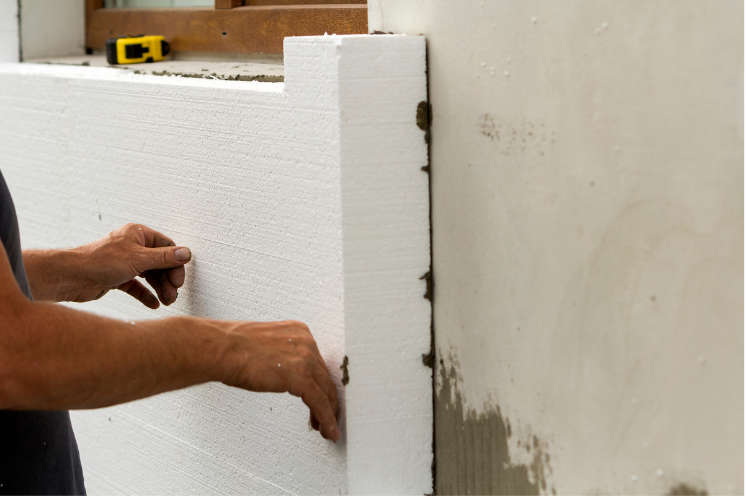
Rigid Foam Board Insulation in the Lower Mainland, BC
Rigid foam board is insulation in solid panels – EPS, XPS or polyiso – used on basement and crawlspace walls, under slabs, on exterior walls and on low-slope roofs. Western Insulation installs it across Langley, Metro Vancouver and the Fraser Valley with sealed joints, and covers it with the thermal barrier BC code requires.
Insulation That Handles Moisture
Foam board doesn’t soak up water, keeps its shape, and adds R-value with very little thickness, which is why it works so well against concrete and on the outside of walls.

Basement and crawlspace walls

Under concrete slabs

Exterior continuous insulation
Why Choose Rigid Foam Board

High R-value in a thin layer
About R-3.6 to R-6 per inch depending on the type.

Moisture-tolerant
Ideal against concrete, where batts can trap damp.

Stops thermal bridging
A continuous layer outside the studs cuts heat loss through framing.

Strong under load
Higher-density boards go under slabs and floors.
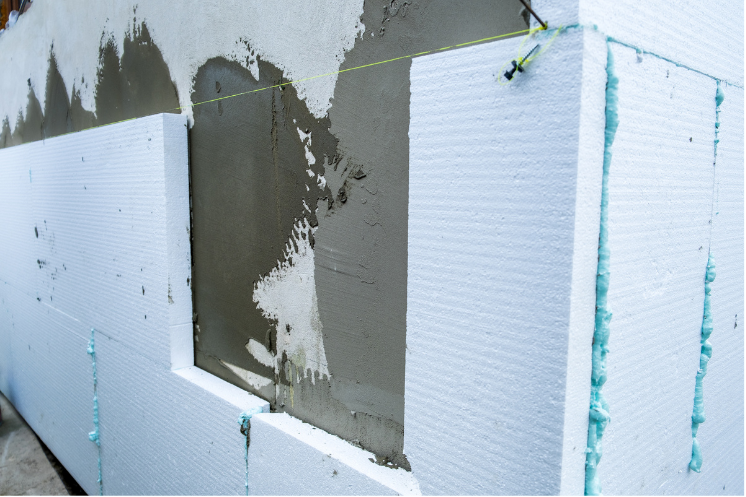
EPS vs XPS vs Polyiso
Insulation Options

Expanded Polystyrene (EPS)
Cost-effective option with good R-value and moderate moisture resistance

Extruded Polystyrene (XPS)
Superior moisture resistance ideal for below-grade applications and wet environments

Polyisocyanurate (Polyiso)
Highest R-value per inch with integrated foil facing for enhanced performance

Custom Panel Systems
Precisely cut panels for specific applications with integrated tape systems for sealing
Rigid Foam Must Be Covered Indoors Insulation for Your Rigid Foam Installation
Like spray foam, foam board is a foamed plastic. Inside a home it generally must be covered with an approved thermal barrier such as half-inch drywall. Our spray foam thermal barrier guide explains the BC rules for both.
Choosing between foam types or between board and spray foam? Read our rigid foam insulation guide or compare with spray foam insulation.
Why Homeowners Choose Western Insulation for Rigid Foam Insulation

Established 1998 and based in Langley Township – local crews who know Lower Mainland homes

In-house installation crews

Rebate-ready invoices showing area, R-value before and after, and insulation type

Workmanship warranty

Before-and-after photos of the finished work
What Our Customers Say
Rigid Foam Rebates (HPCN Contractor Required)
Take advantage of substantial incentives through BC Hydro and FortisBC energy efficiency programs. Our team streamlines the application process to maximize your eligible savings for rigid foam insulation projects.
Current BC Rebates Include

Basement and crawlspace walls, exterior wall sheathing: $0.09 × R × sq ft, up to $1,200 each

Example: 400 sq ft of basement wall with 2 inches of XPS (about R-10) = 10 × 400 × $0.09 = $360

Bonus up to $2,000 for completing more than one upgrade
Details on our rebates page.
Related Services
Rigid foam is often used alongside basement and crawlspace insulation, roof insulation and spray foam insulation, for foundations, roofs and walls that need R-value in tight spaces.
Rigid Foam Insulation Across Langley, Metro Vancouver and the Fraser Valley
Our crews are based in Langley Township and do most rigid foam insulation work in Langley, Surrey, White Rock, Aldergrove, Abbotsford and Maple Ridge, with regular projects across the rest of Metro Vancouver and the Fraser Valley.
Get a Rigid Foam Quote
Tell us where it’s going – basement, slab, exterior or roof – and we’ll recommend the board, thickness and thermal barrier.
Frequently Asked Questions
What is the difference between EPS, XPS and polyiso?
EPS (expanded polystyrene) is the lowest cost, at about R-3.6 to R-4.2 per inch. XPS (extruded polystyrene) is about R-5 per inch and handles moisture best, so it suits foundations and under-slab work. Polyiso is about R-6 per inch with foil facings and is used mostly on exterior walls and roofs.
Where is rigid foam insulation used in a house?
Rigid foam is used on basement and crawlspace walls, under concrete slabs, as continuous insulation on exterior walls under siding, and on low-slope roofs. It works best where moisture is a concern or where you need R-value in very little space.
Does rigid foam need to be covered?
Inside the home, yes in most cases. Rigid foam is a foamed plastic, and the BC Building Code generally requires it to be covered by an approved thermal barrier such as half-inch drywall. Exterior foam is covered by cladding with a proper water-resistive barrier and flashing.
Is rigid foam better than spray foam?
Each has its place. Rigid foam is cheaper and ideal for flat, open surfaces like basement walls and slabs, but every joint must be sealed. Closed-cell spray foam costs more but seals irregular areas such as rim joists and crawlspace corners in one step. Many projects use both.
Does rigid foam qualify for BC Hydro rebates?
Yes, when an HPCN contractor installs it. Rigid foam on basement or crawlspace walls or as exterior wall sheathing earns $0.09 × R-value × sq ft, up to $1,200 per area. For example, 400 sq ft of basement wall with about R-10 of XPS earns roughly $360.