Home Insulation

How Much Does Home Insulation Save on Energy Bills in Langley BC?

How Much Does Home Insulation Save on Energy Bills in Langley BC?

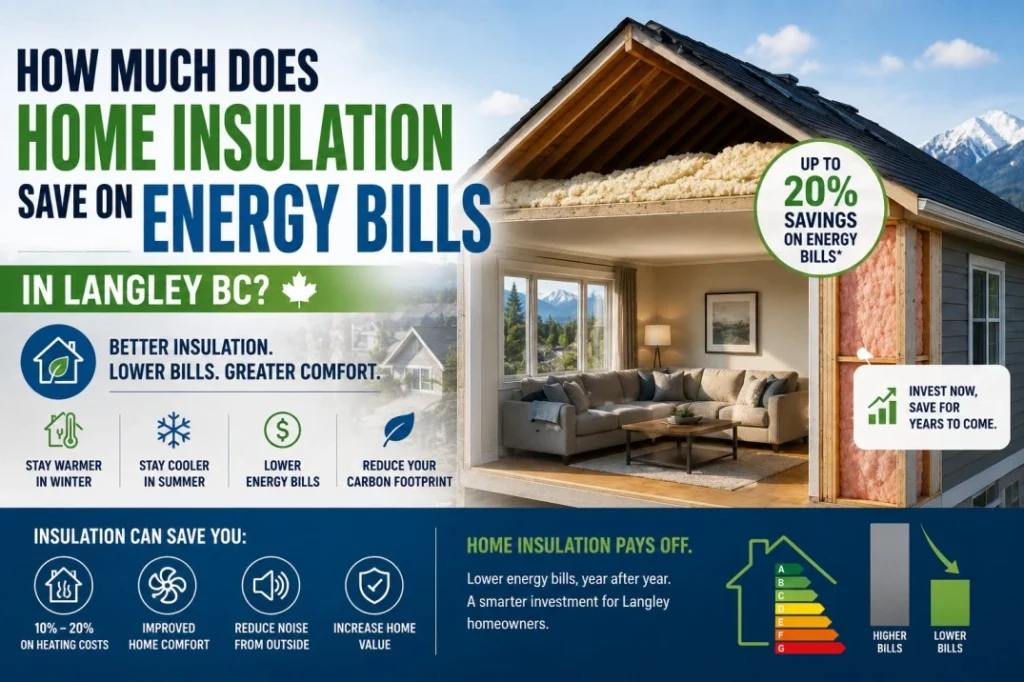
How Much Does Home Insulation Save on Energy Bills in Langley BC? The short answer: a properly insulated Langley home saves between 10% and 30% on annual heating and cooling costs, with most whole-home upgrades delivering payback within three to five years — and up to $5,500 in BC rebates reducing the upfront investment significantly. But the short answer only tells part of the story. The amount you save depends on which part of your home is insulated, what material is used, how well it is installed, and how under-insulated your home was to begin with. A Langley home that has never had its crawlspace or walls insulated will see far greater savings than one where only an attic top-up is needed. This guide breaks it down clearly — zone by zone, number by number — so you know exactly what to expect before you book a single assessment. Why Energy Savings From Insulation Are Higher in Langley Than Most Canadians Expect Langley sits in BC Climate Zone 4 — a climate defined by sustained damp cold in winter, significant temperature swings between seasons, and a heating season that runs from October through April. Unlike prairie cities where extreme cold dominates, Langley’s challenge is the persistence of cool, wet conditions that put constant pressure on your home’s building envelope. This persistent pressure means heat loss in an under-insulated Langley home is not occasional — it is continuous. Your furnace or heat pump is compensating for that loss every hour of every day during the heating season. The cumulative energy cost of that compensation is what proper insulation eliminates — and in BC, heating and cooling account for approximately 60 to 65% of a typical household’s total energy bill. According to BC Hydro and FortisBC program data, typical homeowners save at least 10% on their home’s energy costs after an insulation upgrade. Western Insulation’s own project data across more than 2,400 completed homes in the Fraser Valley puts the average savings from a full attic and crawlspace upgrade at 20 to 30% — a figure consistent with Natural Resources Canada research on whole-home insulation performance. Energy Savings by Zone: Where Insulation Delivers the Most Impact Different parts of your home lose heat at different rates — and understanding which zones deliver the highest return helps you prioritise your investment. Attic Insulation: The Highest Single Impact The attic is the single largest source of heat loss in a typical Langley home. Heat rises naturally, and without sufficient R-value above the ceiling plane, it escapes continuously through the roof — regardless of what the rest of your home’s envelope looks like. Expected savings: 15 to 25% reduction in heating costs for homes moving from R-20 or below to R-50 or R-60. Most Langley homes built before 2000 have attic insulation sitting between R-12 and R-30 — well below the current BC Building Code minimum of R-40 to R-50 and the R-60 that our attic insulation service in Langley BC targets for optimal Fraser Valley performance. The gap between what these homes have and what they need is measured directly in monthly energy costs. A household spending $250 per month on heating with an attic at R-20 that upgrades to R-60 can expect to reduce that specific portion of heat loss by 25 to 40%, depending on ceiling area and construction. For a 1,200 square foot attic floor, this translates to a meaningful and measurable reduction in monthly bills — one that accumulates month after month through every heating season for the 25 to 30-year life of the insulation. Crawlspace Insulation: The Most Underestimated Saving Poorly insulated walls, attics, or basements can cause up to 40% of a home’s total heat loss — forcing your heating and cooling systems to work harder than they should. The crawlspace’s contribution to that figure is consistently underestimated because it is invisible — Langley homeowners do not see the cold air entering through uninsulated floor joists the way they feel a draft from a window. Expected savings: 10 to 15% reduction in total home heating costs for homes with previously uninsulated crawlspaces. Cold floors above an uninsulated crawlspace are one of the most consistent complaints from Langley homeowners in older homes — and they are a direct expression of the energy loss happening beneath your feet. Our crawlspace and basement insulation service for Langley homes uses closed-cell spray foam and a heavy-duty vapour barrier to address both the thermal loss and the moisture conditions that compound the energy problem in BC’s damp climate. Wall Insulation: The Largest Surface Area, The Biggest Opportunity Exterior walls represent the largest surface area of your home’s building envelope — and in a Langley home built before 1995, those walls are almost certainly under-insulated relative to current BC standards. Empty or minimally insulated 2×4 wall cavities perform at R-8 or below in real-world conditions, against a BC code requirement of effective R-22 to R-24. Expected savings: 10 to 20% reduction in total energy costs for homes with empty or near-empty wall cavities that are brought to full density. Our wall insulation retrofit guide for existing Langley homes explains how dense-pack blown-in insulation through small access holes — without drywall removal — brings those cavities to R-13 to R-22 depending on framing depth. This is the most underutilised energy upgrade available to existing Langley homes, and it is one where the absence of local competitor content means homeowners frequently do not realise it is an option without demolition. Whole-Home Insulation: Where the Numbers Compound The most significant energy savings come when attic, crawlspace, and wall insulation are addressed as a coordinated system. Heat loss pathways are interconnected — plugging one without addressing others delivers partial results. Expected savings for a whole-home upgrade across all zones: 20 to 30% reduction in total annual energy costs. For a Langley household with a combined heating and cooling bill of $3,000 per year, a 25% reduction represents $750 in annual savings — every year, for the life

How Much Does Home Insulation Save on Energy Bills in Langley BC? Read More »

Insulation and Mold Prevention in Langley BC | Western Insulation Guide

Insulation and Mold in Langley BC: How the Right Insulation Prevents Mold in Your Home

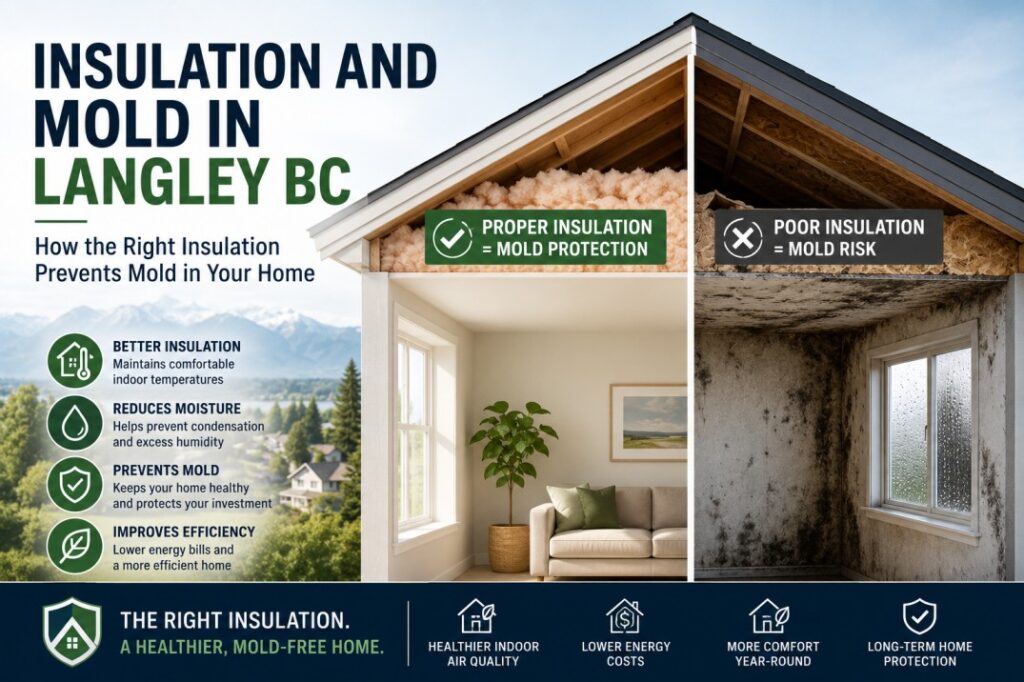
Insulation and Mold in Langley BC: How the Right Insulation Prevents Mold in Your Home Langley has one of the dampest climates in Canada. The Fraser Valley’s wet winters, persistent ground moisture, and frequent temperature cycling between mild and cold create conditions where mold does not just grow — it thrives. And in a home with poorly installed, damaged, or absent insulation, mold finds exactly what it needs to establish itself behind drywall, in attic sheathing, along floor joists, and throughout crawlspace framing — often for years before a homeowner notices. The connection between insulation and mold is one of the least understood aspects of home performance in BC. Most homeowners think of insulation as an energy product and mold as a hygiene problem. In reality, they are two sides of the same coin. The conditions that allow mold to take hold — persistent moisture, condensation, stagnant cold air, inadequate vapour control — are exactly the conditions that well-installed, appropriate insulation prevents. Get the insulation right and you eliminate the moisture conditions that mold depends on. Get it wrong — or skip it entirely — and you create them. This guide explains the relationship clearly, covers the specific locations in a Langley home where insulation and mold interact most critically, and tells you what to do whether you are trying to prevent a problem or address one that already exists. Why Langley’s Climate Makes Mold a Serious Risk Mold requires three things to grow: a food source, the right temperature, and moisture. In a Langley home, moisture is the critical variable — and it is the one that insulation directly controls. BC’s Lower Mainland receives among the highest annual rainfall of any major Canadian region. Ground moisture levels are consistently elevated throughout the year. Temperatures in Langley cycle repeatedly through the freeze-thaw range during winter — a pattern that drives condensation on cold surfaces inside wall assemblies, attic sheathing, and crawlspace framing every time the temperature drops. In a well-insulated home with proper vapour control, these external conditions have little impact on the interior of the building envelope. Warm interior surfaces do not allow condensation to form. Air bypasses are sealed so humid interior air cannot reach cold structural surfaces. The crawlspace floor is covered with a vapour barrier that prevents ground moisture from evaporating upward. In a poorly insulated home — or one where insulation has degraded, compressed, or been damaged — those protections are absent. Cold surfaces inside the building envelope reach dew point, condensation forms, and mold follows. It is not a question of if. It is a question of when and how much. The Four Places Insulation and Mold Interact in Langley Homes 1. The Attic The attic is the most common location for mold problems in Langley homes — and inadequate or improperly installed insulation is almost always a contributing factor. Here is how it happens. Warm, moist air from your living space rises naturally toward the ceiling. In a properly air-sealed attic, that air is blocked by thorough sealing around every penetration — light fixtures, plumbing stacks, wall top plates, and the attic hatch. In an attic that has not been air-sealed, that warm moist air travels freely through gaps in the ceiling plane and rises into the cold attic space above. When warm humid air meets the cold surface of the roof decking in winter, it condenses. Repeated condensation on wood sheathing creates the moisture film that mold needs to germinate. Left unaddressed, this leads to visible mold growth on roof decking, deterioration of structural timber, and eventually significant remediation costs. The fix is not simply adding more insulation on top of existing material — it is air sealing every bypass location first, then bringing the insulation to the correct R-value. Air sealing removes the pathway for warm moist air to reach cold attic surfaces. Adequate insulation keeps the ceiling plane warm enough to prevent condensation even when minor air movement occurs. Both steps together are what Western Insulation’s attic insulation service includes as standard on every Langley project — because doing one without the other leaves the moisture problem partially unaddressed. If mold is already present in your attic when you book an insulation upgrade, the correct sequence is professional removal of contaminated existing insulation first — our insulation removal service handles this — followed by air sealing, and then new insulation installation. Adding new blown-in insulation on top of mold-contaminated material does not resolve the mold. It covers it, and the problem continues underneath. 2. The Crawlspace The crawlspace is the second most common location for mold in Langley homes — and in many cases the most damaging, because crawlspace mold reaches structural floor joists, subfloor panels, and the underside of finished flooring before it is noticed. An uninsulated, unsealed crawlspace in Langley is a moisture factory. Ground moisture evaporates upward into the crawlspace air continuously. Without a vapour barrier and proper insulation, that moisture-laden air has nowhere to go — it contacts the cold underside of the floor structure above and condenses. In a Langley winter, this cycle repeats daily. Fibreglass batts installed in crawlspace floor joists absorb moisture and compound the problem — wet fibreglass holds moisture against the joists it is supposed to protect and becomes a food source for mold itself. This is one of the key reasons Western Insulation recommends against fibreglass batts in crawlspace applications in BC’s climate and instead uses closed-cell spray foam insulation on crawlspace walls combined with a heavy-duty polyethylene vapour barrier on the crawlspace floor. Closed-cell spray foam does not absorb moisture, does not provide a food source for mold, and acts as both insulation and vapour barrier simultaneously — eliminating the conditions mold needs rather than just slowing heat loss. For a complete guide to addressing crawlspace moisture and insulation together, see our basement and crawlspace insulation page. 3. Exterior Walls Wall-cavity mold is less visible and less commonly discussed than attic or crawlspace mold — but it is

Insulation and Mold in Langley BC: How the Right Insulation Prevents Mold in Your Home Read More »

Home Insulation Langley BC | Services, Costs & Rebates

Home Insulation in Langley, BC: Services, Costs & Rebates Up to $5,500

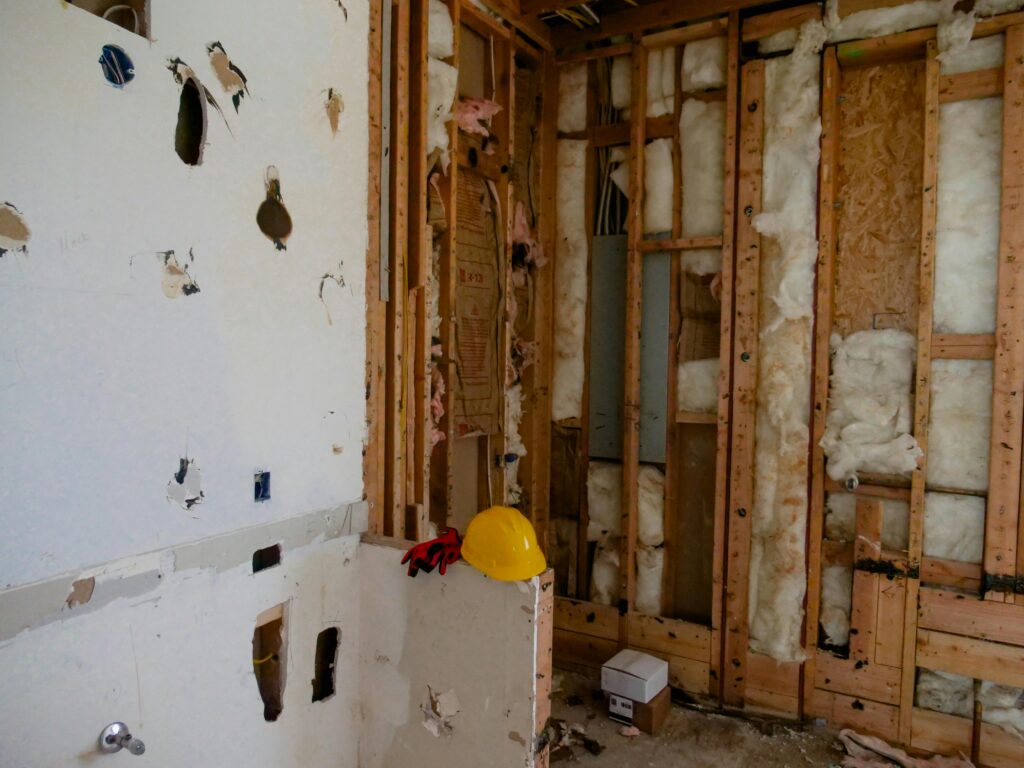
Home Insulation in Langley, BC: Services, Costs & Rebates Up to $5,500 If your Langley home feels drafty in winter, uncomfortably warm in summer, or your energy bills seem too high for what you’re getting — poor insulation is almost certainly the culprit. The good news? A professional home insulation upgrade can solve all three problems at once, and with government rebates available right now in BC, the timing has never been better. Whether you’re searching for home insulation companies near me, trying to understand what the upgrade will cost, or wondering how to claim a rebate for home insulation, this guide covers everything Langley homeowners need to know. Why Home Insulation Matters in Langley’s Climate Langley sits in the heart of the Fraser Valley, where winters bring sustained cold and damp, and summers can push well above 30°C. That swing in temperature puts serious pressure on your home’s thermal envelope — the barrier between the conditioned air inside your home and the outdoors. When insulation is thin, old, or missing entirely, heat escapes through your ceilings, walls, and floors all winter long. In summer, the same gaps let hot air pour in, forcing your air conditioning to work overtime. The result is energy waste, inconsistent room temperatures, and utility bills that never seem to go down. Properly installed home insulation creates a continuous thermal shield. Most Langley homeowners who complete a whole-home insulation upgrade report energy savings of 20–40% on heating and cooling costs. Beyond the savings, the comfort improvement is immediate — no more cold spots, no more drafty hallways, and no more rooms that feel ten degrees different from each other. Types of Home Insulation Services in Langley Not every area of your home loses heat the same way, so the right insulation solution depends on where the problem is. Attic Insulation The attic is the single biggest source of heat loss in a typical BC home. BC Building Code targets a minimum R-50 for attic spaces in the Lower Mainland. If your existing insulation is compressed, thin, or damaged, it almost certainly falls short. Blown-in insulation — either cellulose or fibreglass — is the most common and cost-effective solution for attic upgrades in Langley. Wall Insulation Exterior walls without proper insulation allow cold air to seep into your living spaces year-round. Wall insulation also provides a meaningful soundproofing benefit, reducing noise from outside and between rooms — particularly valuable if your home is near a busy road. Crawlspace & Basement Insulation Cold floors are one of the clearest signs of poor crawlspace or basement insulation. Insulating these areas eliminates moisture issues, prevents mold, and keeps the ground-floor rooms of your home at a comfortable temperature. Air Sealing & Weatherization Insulation works best when combined with proper air sealing. Gaps around plumbing, electrical, and framing allow conditioned air to escape regardless of how much insulation is present. Air sealing and weatherization are done alongside insulation installation to maximize the effectiveness of the upgrade. Mobile Home Insulation Mobile homes have unique insulation needs given their construction. If you’re searching for mobile home insulation near me in the Langley area, look for a contractor experienced with the specific challenges of manufactured housing, including floor insulation and skirting. How Much Does Home Insulation Cost in Langley? Home insulation cost in Langley depends on several factors: the size of your home, the areas being insulated, the type of insulation used, and whether any existing insulation needs to be removed first. As a general guide for Langley homeowners: These figures shift considerably once you factor in the government rebates available to BC homeowners — which can reduce your out-of-pocket cost by thousands of dollars. Home Insulation Rebates in Langley, BC This is where it gets genuinely exciting for Langley homeowners. BC’s provincial and utility rebate programs have made insulation upgrades remarkably affordable. BC Hydro & FortisBC Rebates Through the Home Renovation Rebate Program — a partnership between BC Hydro, FortisBC, and the Province of BC — eligible homeowners can access rebates based on the R-value of insulation added and the area covered. The available rebate amounts vary by heating fuel type (electric vs. natural gas) and the scope of the project. CleanBC Energy Savings Program Income-qualified BC households can access rebates of up to $5,500 for insulation upgrades through the CleanBC Energy Savings Program. Enhanced rebates of up to $33,900 are available for qualifying households that complete broader energy retrofits including heat pumps, windows, and more. Key Rebate Requirements Working with a contractor who is already registered with BC Hydro’s rebate program — and who handles the entire application process on your behalf — eliminates the paperwork headache entirely. Signs Your Langley Home Needs an Insulation Upgrade Not sure whether your home is due for an upgrade? These are the most common warning signs: Why Choose Western Insulation for Your Langley Home Western Insulation has been serving Langley and the Fraser Valley since 1998 — over 25 years of local experience in BC’s specific climate conditions. Our team holds full registration with BC Hydro’s rebate program, and we manage the entire rebate application on your behalf, from checking your eligibility to submitting all required documentation. Our home insulation services in Langley cover attic insulation, basement and crawlspace insulation, wall insulation, air sealing, insulation removal, and more — using premium materials including blown-in insulation, batt insulation, spray foam, and rigid foam board. We offer a free, no-obligation home assessment to every Langley homeowner. During the assessment, we evaluate your current insulation levels, identify where your home is losing energy, and walk you through the best options — including every rebate your home qualifies for. Our service area includes: Langley City, Langley Township, Walnut Grove, Willoughby, Fort Langley, Aldergrove, and all surrounding communities. Getting Started: Install Home Insulation in Langley Today If you’re ready to install home insulation or simply want to understand what your home needs, the process starts with a conversation. A free assessment from a qualified local contractor takes the

Home Insulation in Langley, BC: Services, Costs & Rebates Up to $5,500 Read More »

bc-hydro.png
clean-bc.png
fortis-bc.png
Get Rebates On Your Insulation