home insulation Langley

Insulation R-Value Guide for Langley BC Homeowners: What You Actually Need

Insulation R-Value Guide for Langley BC Homeowners: What You Actually Need If you’ve been researching insulation for your Langley home, you’ve almost certainly come across the term R-value — and you’ve probably wondered what number you actually need for your attic, your walls, your basement, or your crawlspace. The short answer is that it depends on where in your home you’re insulating. Different parts of your home lose heat in different ways and at different rates, and BC Building Code sets different minimum requirements for each one. The longer answer — and the more useful one — is what this guide covers in full. Understanding R-value before you hire a contractor or purchase materials means you can ask the right questions, evaluate quotes accurately, and make sure the job is done to the standard your Langley home actually needs. What Is R-Value and Why Does It Matter? R-value is a number that measures how well an insulation material resists the flow of heat. The higher the R-value, the more effectively that material slows heat from escaping your home in winter or entering it in summer. Think of it like a winter jacket. A thin cotton jacket might keep you comfortable on a mild day, but in a Langley February — when temperatures are damp and cold and wind is cutting across the Fraser Valley — you need something with real thickness and density. Insulation works the same way. A wall with R-12 might have been adequate when your home was built in the 1980s, but today’s BC Energy Step Code requirements and rising energy costs mean that standard no longer serves you. What makes R-value practically important for Langley homeowners is this: two homes that look identical from the outside can perform very differently depending on the R-values installed in their walls, attic, and foundation. A well-insulated home holds heat efficiently, runs its heating and cooling systems less, and keeps every room at a consistent, comfortable temperature. An under-insulated home fights a losing battle against the cold all winter — and you pay for that difference in your monthly energy bill. R-Value Requirements by Zone: What BC Building Code Requires for Langley Langley falls within BC Climate Zone 4, which covers most of Metro Vancouver and the Fraser Valley. Here is what the BC Building Code currently requires for each zone of your home — and what Western Insulation recommends to meet or exceed those standards for real-world performance. Attic Insulation: R-50 Minimum, R-60 Recommended The attic is where most Langley homes lose the most heat. Hot air rises, and without sufficient insulation in the attic floor, that warmth escapes directly through the roof. BC Building Code requires a minimum of R-40 to R-50 for attic assemblies in Climate Zone 4, but many Langley energy advisors and contractors — including our team at Western Insulation — recommend pushing to R-60 where possible. The difference between R-50 and R-60 may seem incremental on paper, but in practice it closes the gap between code compliance and genuinely high-performing thermal comfort. For most Langley attics, blown-in insulation — either ProPink fibreglass or cellulose — is the most efficient way to achieve R-50 to R-60. It covers every corner, fills irregular joist layouts, and achieves a consistent, seamless layer without gaps. If you’ve never had your attic insulation checked, it’s one of the most valuable free assessments you can book — especially in homes built before 2000, which frequently fall well below current code requirements. Exterior Walls: R-22 to R-24 Effective Exterior walls in Langley require an effective R-value of between R-22 and R-24, depending on your assembly type and local amendments. For a standard 2×6 stud wall, fibreglass or mineral wool batts in the cavity combined with a layer of continuous rigid foam on the exterior is the most common method for reaching this target without thermal bridging through the framing. What is thermal bridging? It is what happens when the wooden studs in your wall conduct heat directly to the outside, bypassing the insulation in the cavity between them. A 2×6 wall filled with R-21 batts does not actually perform at R-21 — it performs closer to R-15 due to bridging losses through the framing. Adding even a thin layer of continuous rigid foam insulation on the exterior breaks that bridge and brings the whole wall assembly up to where it needs to be. Basement Walls: R-20 Minimum Basement walls in Langley need a minimum effective R-value of R-20 under BC code. This is typically achieved with closed-cell spray foam insulation applied directly to the concrete foundation wall, or with rigid foam board panels installed against the wall and covered with a framed assembly. Spray foam is the superior choice for moisture control — it bonds directly to concrete, creates an air and vapour barrier in one step, and does not absorb water the way fibreglass does. If your basement walls are currently uninsulated or insulated with old fibreglass batts that have sagged or compressed, upgrading to a modern system delivers an immediate improvement in floor temperature, energy efficiency, and moisture control. This is covered in more depth in our crawlspace and basement insulation guide for Langley. Crawlspace Walls: R-20 Minimum Crawlspace walls follow similar code requirements to basement walls — R-20 minimum — but the moisture considerations are even more pronounced. An open, damp crawlspace in Langley is one of the most common sources of cold floors, mold growth, and energy loss in the area’s housing stock. Our basement and crawlspace insulation service addresses both the insulation and the vapour barrier, treating the crawlspace as a complete system rather than just a cavity to fill. Interior Walls: No Code Minimum, But Acoustic Matters BC Building Code does not set thermal R-value requirements for interior walls because they do not separate conditioned space from the outdoors. However, if noise control is a priority — which it increasingly is in Langley’s growing strata and multi-family market — mineral wool batt insulation in

Insulation R-Value Guide for Langley BC Homeowners: What You Actually Need Read More »
Crawlspace Insulation in Langley BC | Costs, Types & Moisture Control

Crawlspace Insulation in Langley: What BC Homeowners Need to Know

Crawlspace Insulation in Langley: What BC Homeowners Need to Know If the floors in your Langley home feel cold in winter no matter how high you turn the heat, or if your energy bills keep creeping up year after year, the problem may not be in your walls or your attic — it could be directly beneath your feet. The crawlspace is one of the most overlooked and underinsulated areas of a home in BC, and in Langley’s damp, variable climate, poor crawlspace insulation doesn’t just cost you money. It can lead to mold growth, wood rot, pest infestations, and serious long-term damage to your home’s structure. In this guide, the team at Western Insulation walks you through everything Langley homeowners need to know about crawlspace insulation — from what it is and why it matters, to the best insulation types for BC’s climate, realistic costs, and the rebates available to reduce your investment. Why Crawlspace Insulation Matters in Langley’s Climate Langley sits in the heart of the Fraser Valley, where winters bring sustained damp cold and ground moisture levels are consistently high. A crawlspace that isn’t properly insulated and sealed acts like a cold, humid chamber sitting directly under your living areas — and your home pays the price. The consequences of an uninsulated or poorly insulated crawlspace include: Cold floors and uneven temperatures. Heat from your living space escapes down through uninsulated floor joists, leaving ground-floor rooms perpetually cold regardless of your thermostat setting. Mold and moisture damage. Warm air from inside meets cold crawlspace surfaces and condenses. Over time this creates the moisture conditions mold needs to thrive — and once mold is established in a crawlspace, it spreads. This is one of the most common issues our team finds during inspections across Langley homes, and it’s the reason we always recommend addressing crawlspace moisture before any new insulation goes in. For more on how insulation and moisture interact, see our complete guide to attic insulation removal and replacement in Langley. Higher heating and cooling bills. An uninsulated crawlspace undermines the performance of every other insulation upgrade in your home. You can have a perfectly insulated attic and still lose significant heat through the floor if the crawlspace is neglected. Pest entry points. Exposed, uninsulated crawlspaces are an open invitation for rodents and insects. Insulation combined with proper sealing eliminates the gaps and warmth gradients that attract pests. Types of Crawlspace Insulation: Which Is Best for Langley Homes? Not all insulation materials perform equally in a crawlspace environment. The key difference from attic insulation is moisture: crawlspaces in the Fraser Valley are damp by nature, and any material you use must be able to handle that environment without absorbing moisture, sagging, or growing mold. Closed-Cell Spray Foam For most Langley crawlspaces, closed-cell spray foam insulation is the top-performing choice. Applied directly to crawlspace walls and rim joists, it acts as both insulation and a vapour barrier simultaneously. With an R-value of approximately R-6 to R-7 per inch, it delivers high thermal resistance in a thin profile, and it doesn’t absorb moisture or support mold growth. It also seals air gaps completely — critical for preventing cold air infiltration in Langley winters. Rigid Foam Board Rigid foam insulation is a cost-effective alternative for crawlspace walls. Installed against foundation walls in panels, it provides solid R-value per inch and excellent moisture resistance. XPS (extruded polystyrene) board in particular performs well in wet conditions and is a common choice for Langley basement walls and crawlspace perimeters. Fibreglass Batts (With Caution) Traditional fibreglass batts can be used in crawlspace floor joists but come with a significant caveat in BC’s climate: fibreglass absorbs and holds moisture. In a damp crawlspace, fibreglass batts will sag, lose R-value, and can fall out over time. If batts are used, a proper vapour barrier is non-negotiable. Our team generally recommends spray foam or rigid foam over batts for any Langley crawlspace due to the local moisture conditions. If you want to understand how batt insulation compares in other applications, see our batt insulation page. The Role of the Vapour Barrier No crawlspace insulation job in Langley is complete without a vapour barrier — and this is where many DIY installations fall short. A vapour barrier is a heavy-duty polyethylene liner (minimum 6 mil, ideally 10–20 mil) that covers the crawlspace floor and laps up the walls. Its job is to block ground moisture from evaporating up into the space above it. In BC, the Building Code requires vapour barriers in crawlspaces. When combined with proper insulation, a quality vapour barrier: Western Insulation installs vapour barriers as part of every crawlspace insulation project in Langley. We assess the existing moisture conditions during our initial inspection and recommend the right liner thickness for your home’s specific situation. How Much Does Crawlspace Insulation Cost in Langley? Crawlspace insulation costs in Langley vary based on the size of the space, the material used, and whether a vapour barrier and air sealing are included. As a general guide: The good news is that crawlspace insulation upgrades may qualify for BC Hydro and FortisBC rebate programs. Eligible homeowners can access up to $5,500 back on qualifying energy efficiency upgrades. Western Insulation handles all rebate paperwork on your behalf. Learn more on our BC insulation rebates page. What to Expect From a Professional Crawlspace Insulation Job A proper crawlspace insulation project in Langley involves more than just adding material. When you book with Western Insulation, here’s what the process looks like: 1. Inspection and assessment. We inspect the crawlspace for existing moisture damage, mold, pest evidence, air bypass locations, and the condition of any existing insulation. If old material needs to come out, our insulation removal team handles it cleanly before new work begins. 2. Air sealing. All gaps, penetrations, and rim joist areas are sealed to stop cold air infiltration. This step makes a significant difference to the thermal performance of the finished job. 3. Vapour barrier installation. A code-compliant polyethylene

Crawlspace Insulation in Langley: What BC Homeowners Need to Know Read More »

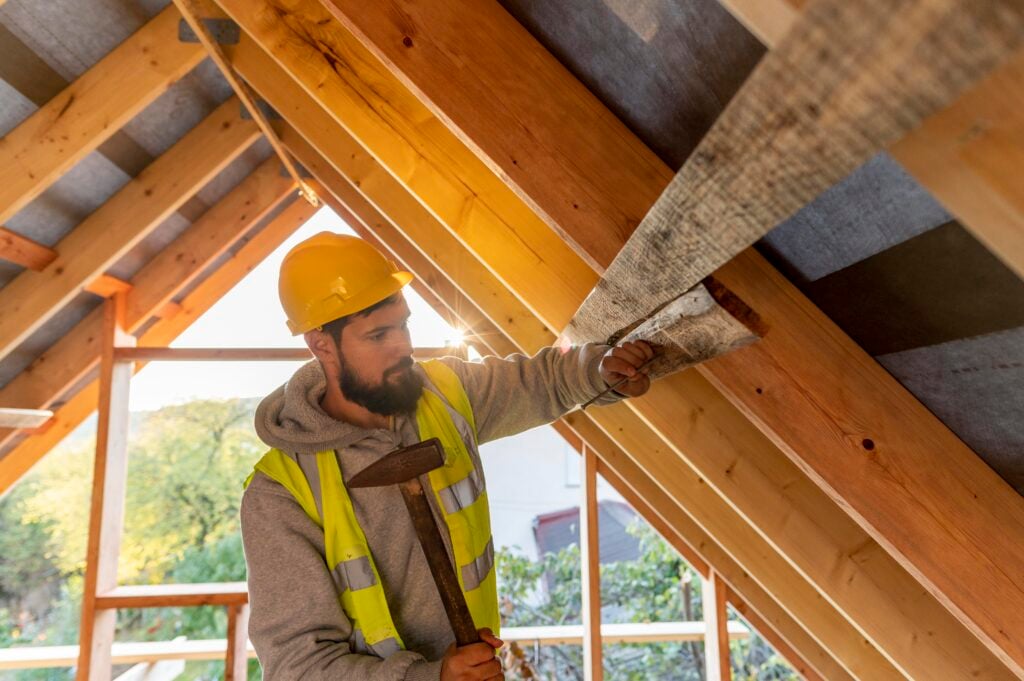
Attic insulation contractor installing insulation between roof rafters in Langley BC home

When to Replace Your Attic Insulation in Langley: Signs, Process & Costs

When to Replace Your Attic Insulation in Langley: Signs, Process & Costs Most Langley homeowners think about adding attic insulation — but far fewer think about removing the old stuff first. If your home was built before 2000, the insulation currently sitting in your attic may be doing more harm than good. It could be compressed, moisture-damaged, contaminated with mold, or simply too thin to meet today’s energy standards. Knowing when to replace (not just top up) your attic insulation is one of the most important home maintenance decisions you can make in the Fraser Valley’s damp, variable climate. In this guide, we walk you through the clear warning signs, what the removal and replacement process actually looks like, what it costs, and how to make the most of the BC rebates available to Langley homeowners. 5 Signs Your Langley Attic Insulation Needs to Be Replaced (Not Just Topped Up) Adding new insulation on top of old, damaged material is a common mistake. Here’s when a full removal and replacement is the right call: 1. You Can See Moisture, Staining, or Mold Langley’s wet winters push moisture into attic spaces. Once insulation gets wet, it loses its R-value immediately and becomes a breeding ground for mold. Wet batt insulation in particular clumps and sags, leaving gaps where heat escapes freely. If you spot dark staining, musty odours, or visible mold, a professional insulation removal is essential before any new material goes in. 2. Your Home Has Vermiculite or Old Fibreglass Batts Homes built before the 1990s may contain vermiculite insulation, which can be associated with asbestos contamination. Even if it isn’t vermiculite, old fibreglass batts from the 1980s and 90s have often settled to a fraction of their original depth and no longer provide meaningful resistance. Topping up over degraded material gives you a false sense of security without the performance. 3. You’ve Had a Rodent or Pest Problem Mice, squirrels, and other pests frequently nest in attic insulation, contaminating it with droppings and urine. No amount of new insulation fixes a hygiene problem underneath. Full vacuum removal is the only solution, and it protects your family’s air quality long term. 4. Your Energy Bills Keep Climbing If your heating and cooling costs are rising year over year despite no change in usage habits, your attic is likely the culprit. As we’ve covered in our complete guide to attic insulation in Langley, a well-insulated attic can cut energy costs by 20–30%. When old insulation is the barrier to those savings, replacement — not addition — unlocks the full benefit. 5. You’re Planning a Major Renovation If you’re re-roofing, adding HVAC equipment, or converting attic space, it makes sense to start fresh with new, properly installed insulation rather than working around deteriorated existing material. What Does the Attic Insulation Removal Process Look Like? Many homeowners are surprised to learn that professional attic insulation removal is a clean, fast, and minimally disruptive process when done properly. Here’s what to expect when you book a removal and replacement with Western Insulation in Langley: Step 1 – Attic Inspection Our team inspects your attic to assess insulation condition, identify any moisture damage, pest evidence, or air sealing issues, and determine the best removal approach for your home’s layout. Step 2 – Vacuum Removal We use industrial-grade insulation vacuum equipment to remove all existing material safely. The insulation is bagged and disposed of properly off-site. This step also gives us access to the attic floor to seal any bypasses — the small gaps around wires, pipes, and fixtures that allow conditioned air to escape regardless of how much insulation sits above them. Step 3 – Air Sealing This is where significant energy savings are actually won. Before any new insulation goes in, our installers seal all attic bypasses with spray foam or caulking. This step is often skipped by less experienced contractors, but it makes a measurable difference to your home’s thermal performance. Step 4 – New Insulation Installation Depending on your home and goals, we install the most appropriate material — commonly blown-in insulation such as ProPink® cellulose or fibreglass, which covers irregular spaces evenly and achieves the high R-values required by BC building code. For certain applications, batt insulation or rigid foam boards may also be part of the solution. Step 5 – Final Check and Documentation We verify R-value coverage, confirm ventilation is unobstructed, and provide documentation for your records — including what you need for rebate applications. How Much Does Attic Insulation Removal and Replacement Cost in Langley? Costs vary based on attic size, insulation type, and condition of the existing material. As a general guide: The good news? Current BC Hydro and FortisBC programs mean eligible Langley homeowners can access up to $5,500 in rebates on qualifying insulation upgrades. Our team handles all the paperwork — you don’t need to navigate the program requirements on your own. Learn more on our rebates page. Blown-In vs. Batt: Which Is Better for Langley Attic Replacement? After removal, most Langley homes benefit most from blown-in insulation — either cellulose or fibreglass. Blown-in material fills every corner and gap without cutting or fitting around obstructions, making it ideal for the irregular joist layouts common in older Fraser Valley homes. It also achieves higher R-values per inch and settles less over time than older batt products. That said, every attic is different. Our home insulation team in Langley will assess your specific attic and recommend the right product for your goals and budget — not just the easiest option to install. Why Work With a Local Langley Insulation Contractor? Not all insulation companies understand the specific challenges of Langley’s climate — the persistent winter humidity, the temperature swings between seasons, and the ventilation requirements that prevent moisture buildup in a tightly sealed attic. Local experience matters. At Western Insulation, we’ve worked on hundreds of homes across Langley and the Fraser Valley. We understand local building codes, we’re familiar with the home styles and construction

When to Replace Your Attic Insulation in Langley: Signs, Process & Costs Read More »

Home Insulation Langley BC | Services, Costs & Rebates

Home Insulation in Langley, BC: Services, Costs & Rebates Up to $5,500

Home Insulation in Langley, BC: Services, Costs & Rebates Up to $5,500 If your Langley home feels drafty in winter, uncomfortably warm in summer, or your energy bills seem too high for what you’re getting — poor insulation is almost certainly the culprit. The good news? A professional home insulation upgrade can solve all three problems at once, and with government rebates available right now in BC, the timing has never been better. Whether you’re searching for home insulation companies near me, trying to understand what the upgrade will cost, or wondering how to claim a rebate for home insulation, this guide covers everything Langley homeowners need to know. Why Home Insulation Matters in Langley’s Climate Langley sits in the heart of the Fraser Valley, where winters bring sustained cold and damp, and summers can push well above 30°C. That swing in temperature puts serious pressure on your home’s thermal envelope — the barrier between the conditioned air inside your home and the outdoors. When insulation is thin, old, or missing entirely, heat escapes through your ceilings, walls, and floors all winter long. In summer, the same gaps let hot air pour in, forcing your air conditioning to work overtime. The result is energy waste, inconsistent room temperatures, and utility bills that never seem to go down. Properly installed home insulation creates a continuous thermal shield. Most Langley homeowners who complete a whole-home insulation upgrade report energy savings of 20–40% on heating and cooling costs. Beyond the savings, the comfort improvement is immediate — no more cold spots, no more drafty hallways, and no more rooms that feel ten degrees different from each other. Types of Home Insulation Services in Langley Not every area of your home loses heat the same way, so the right insulation solution depends on where the problem is. Attic Insulation The attic is the single biggest source of heat loss in a typical BC home. BC Building Code targets a minimum R-50 for attic spaces in the Lower Mainland. If your existing insulation is compressed, thin, or damaged, it almost certainly falls short. Blown-in insulation — either cellulose or fibreglass — is the most common and cost-effective solution for attic upgrades in Langley. Wall Insulation Exterior walls without proper insulation allow cold air to seep into your living spaces year-round. Wall insulation also provides a meaningful soundproofing benefit, reducing noise from outside and between rooms — particularly valuable if your home is near a busy road. Crawlspace & Basement Insulation Cold floors are one of the clearest signs of poor crawlspace or basement insulation. Insulating these areas eliminates moisture issues, prevents mold, and keeps the ground-floor rooms of your home at a comfortable temperature. Air Sealing & Weatherization Insulation works best when combined with proper air sealing. Gaps around plumbing, electrical, and framing allow conditioned air to escape regardless of how much insulation is present. Air sealing and weatherization are done alongside insulation installation to maximize the effectiveness of the upgrade. Mobile Home Insulation Mobile homes have unique insulation needs given their construction. If you’re searching for mobile home insulation near me in the Langley area, look for a contractor experienced with the specific challenges of manufactured housing, including floor insulation and skirting. How Much Does Home Insulation Cost in Langley? Home insulation cost in Langley depends on several factors: the size of your home, the areas being insulated, the type of insulation used, and whether any existing insulation needs to be removed first. As a general guide for Langley homeowners: These figures shift considerably once you factor in the government rebates available to BC homeowners — which can reduce your out-of-pocket cost by thousands of dollars. Home Insulation Rebates in Langley, BC This is where it gets genuinely exciting for Langley homeowners. BC’s provincial and utility rebate programs have made insulation upgrades remarkably affordable. BC Hydro & FortisBC Rebates Through the Home Renovation Rebate Program — a partnership between BC Hydro, FortisBC, and the Province of BC — eligible homeowners can access rebates based on the R-value of insulation added and the area covered. The available rebate amounts vary by heating fuel type (electric vs. natural gas) and the scope of the project. CleanBC Energy Savings Program Income-qualified BC households can access rebates of up to $5,500 for insulation upgrades through the CleanBC Energy Savings Program. Enhanced rebates of up to $33,900 are available for qualifying households that complete broader energy retrofits including heat pumps, windows, and more. Key Rebate Requirements Working with a contractor who is already registered with BC Hydro’s rebate program — and who handles the entire application process on your behalf — eliminates the paperwork headache entirely. Signs Your Langley Home Needs an Insulation Upgrade Not sure whether your home is due for an upgrade? These are the most common warning signs: Why Choose Western Insulation for Your Langley Home Western Insulation has been serving Langley and the Fraser Valley since 1998 — over 25 years of local experience in BC’s specific climate conditions. Our team holds full registration with BC Hydro’s rebate program, and we manage the entire rebate application on your behalf, from checking your eligibility to submitting all required documentation. Our home insulation services in Langley cover attic insulation, basement and crawlspace insulation, wall insulation, air sealing, insulation removal, and more — using premium materials including blown-in insulation, batt insulation, spray foam, and rigid foam board. We offer a free, no-obligation home assessment to every Langley homeowner. During the assessment, we evaluate your current insulation levels, identify where your home is losing energy, and walk you through the best options — including every rebate your home qualifies for. Our service area includes: Langley City, Langley Township, Walnut Grove, Willoughby, Fort Langley, Aldergrove, and all surrounding communities. Getting Started: Install Home Insulation in Langley Today If you’re ready to install home insulation or simply want to understand what your home needs, the process starts with a conversation. A free assessment from a qualified local contractor takes the

Home Insulation in Langley, BC: Services, Costs & Rebates Up to $5,500 Read More »

bc-hydro.png
clean-bc.png
fortis-bc.png
Get Rebates On Your Insulation