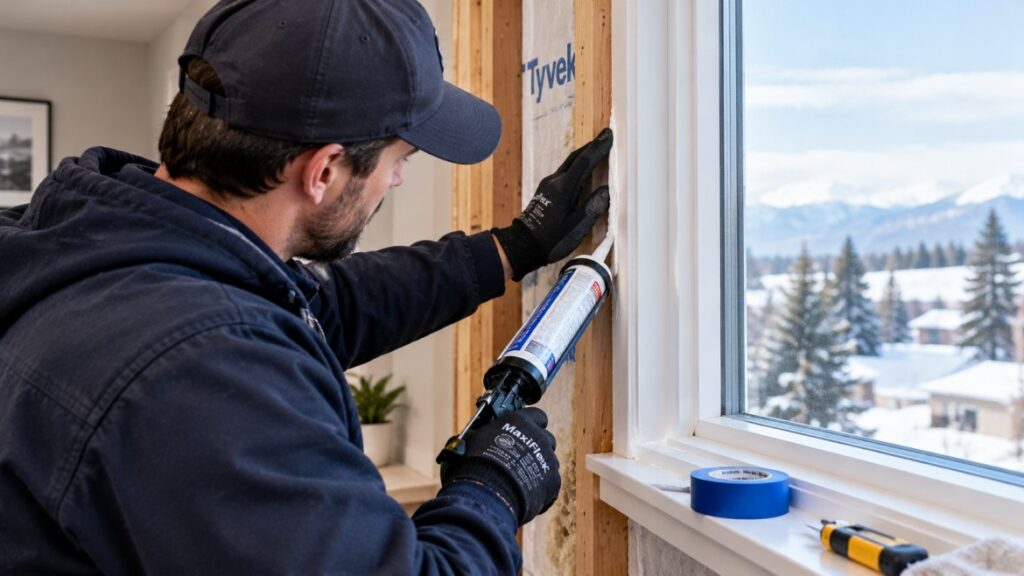
Air Sealing Your Langley Home: How to Stop Winter Drafts at the Source
Quick answer: Air sealing means closing the gaps and cracks that let heated air escape and cold air leak into your home, around pot lights, attic hatches, plumbing and wiring holes, rim joists, windows and doors. In Langley homes, the biggest leaks are usually at the top of the house, in the attic floor. Sealing them before you add insulation reduces drafts, lowers heating bills and helps prevent winter attic condensation.
You’ve turned the thermostat up, but the house still feels drafty. There’s a cold breeze near the baseboards, the upstairs bedroom never quite warms up, and the furnace or heat pump seems to run all day. In many Langley homes, the problem isn’t a lack of heat. It’s air escaping through hundreds of small gaps you can’t see.
This guide explains where those leaks hide, why sealing them comes before adding insulation, and what a professional air sealing job in a Langley home involves.
What Is Air Sealing?
Insulation slows heat moving through your walls and ceilings. Air sealing stops air moving through gaps. They are two different jobs.
Think of insulation as a wool sweater and air sealing as a windbreaker. A thick sweater keeps you warm on a still day, but on a windy day the cold cuts right through it. Add a windbreaker and the sweater works the way it should. Your house is the same: insulation full of air leaks performs far below its rated R-value.
Why Your House Feels Draftiest in Winter
Warm air rises. In winter, heated air pushes up and out through gaps in your ceiling and attic floor. As it escapes at the top, cold outside air is pulled in at the bottom, through gaps around rim joists, baseboards, crawlspace openings and outlets. Building scientists call this the stack effect.
The colder it gets outside, the stronger the effect. That’s why a Langley home that feels fine in October can feel drafty during a January cold snap. The air escaping into the attic also carries moisture, which can condense on the cold roof deck. That’s one of the main causes of attic condensation in winter.
Where Air Leaks Hide in Langley Homes
Langley’s housing ranges from 1980s and 1990s Walnut Grove homes to older Brookswood and Fort Langley houses and newer Willoughby builds. The leak points are similar in all of them, but older homes usually have more.
Top of the house (the biggest leaks)
- Pot lights. Older recessed lights are often open to the attic.
- Attic hatch. Often unsealed and uninsulated.
- Plumbing vent stacks and chimney chases.
- Wire and pipe holes drilled through the top plates of walls.
- Dropped soffits and bulkheads over kitchen cabinets and bathrooms.
- Bathroom fans and their ducts.
Bottom of the house
- Rim joists, where the house framing sits on the foundation.
- Crawlspace and basement openings and gaps around pipes.
- Gaps under baseboards on exterior walls.
In between
- Electrical outlets and switches on exterior walls
- Window and door frames
- Dryer vents, exhaust fan housings and hose bibs
- Gaps where an attached garage meets the house
Because hot air leaves at the top, the attic floor is usually the most important place to start. Air sealing research consistently ranks attic leaks as the biggest contributor to air leakage for the effort involved.
Air Sealing vs. Insulation: Why You Need Both
| Air Sealing | Insulation | |
|---|---|---|
| What it stops | Air moving through gaps | Heat moving through materials |
| Main benefit | Fewer drafts, less moisture in the attic | Slower heat loss, warmer surfaces |
| Typical materials | Spray foam, caulk, gaskets, weatherstripping, rigid blocking | Blown-in fibreglass, batts, spray foam, rigid foam |
| When to do it | Before insulating | After sealing |
| Rebate on its own? | No | Yes, based on R-value added |
The order matters. Once new insulation is blown into an attic, the gaps underneath are buried and much harder to reach. That’s why air sealing is done first, then the attic insulation goes on top.
How Professionals Air Seal a Home
A professional attic air sealing job in a Langley home typically looks like this:
- Inspect and locate leaks. Check the attic floor for dirty or discoloured insulation (a sign of air flowing through it), open pot lights, plumbing stacks and top-plate gaps. A blower door test can measure total leakage when needed.
- Move or remove insulation to expose the leaks. If the old insulation is damaged or contaminated, insulation removal is the cleanest way to get a fresh start.
- Seal the gaps. Small gaps get caulk or low-expansion foam. Larger openings get blocking with rigid board sealed at the edges. Chimney gaps get fire-rated materials.
- Treat pot lights properly. Use airtight, insulation-contact-rated fixtures or approved covers, never just foam or insulation stuffed around them.
- Seal and insulate the attic hatch with weatherstripping and rigid insulation on top.
- Seal rim joists and crawlspace leaks. Spray foam insulation seals and insulates rim joists in one step.
- Insulate. Blow insulation back over the sealed attic floor to R-50 or higher, with baffles to keep soffit vents clear.
DIY Air Sealing: What You Can Do Yourself
Some air sealing is a good weekend project:
- Weatherstrip doors and add door sweeps.
- Caulk gaps around window and door trim (inside).
- Install foam gaskets behind outlet and switch covers on exterior walls.
- Seal around pipes under sinks where they enter walls.
- Weatherstrip the attic hatch and add a piece of rigid foam to the top.
Leave the attic floor, chimneys, pot lights and anything involving old loose-fill insulation to a professional. Moving through an attic can damage ceilings, and some older Langley homes have vermiculite, which should be tested before anyone disturbs it.
Don’t Forget Ventilation
A tighter house holds onto moisture and indoor air pollutants as well as heat, so ventilation matters.
- Make sure bathroom and kitchen fans vent outside and run them during showers and cooking.
- If your home has a gas furnace, water heater or fireplace, ask about combustion safety. Major air sealing can affect how these appliances draw air.
- If your home becomes very airtight, an HRV (heat recovery ventilator) brings in fresh air while keeping most of the heat.
The goal is to seal unintended leaks and control ventilation on purpose.
Does Air Sealing Qualify for BC Rebates?
Not on its own. BC Hydro and FortisBC insulation rebates are based on the R-value of insulation added, so air sealing by itself doesn’t earn a rebate. But it’s part of doing insulation properly. Rebated insulation must be installed by a Home Performance Contractor Network (HPCN) member following the Best Practice Guide for Air Sealing and Insulation Retrofits.
In practice, air sealing your attic before a top-up makes the rebated insulation work better. Attic insulation currently earns $0.02 × R-value added × square feet, up to $900. See current rules on our insulation rebates page.
Stop the Drafts Before the Next Cold Snap
Air sealing is one of the most cost-effective comfort upgrades for a Langley home. It reduces drafts, helps your insulation perform as rated, and lowers the risk of winter attic moisture. Paired with an attic top-up, it’s often the single biggest improvement a home can get in one day.
Western Insulation air seals and insulates homes across Langley, Surrey, Abbotsford and the Lower Mainland. For more winter prep, see our winter home insulation guide and our crawl space vapour barrier guide.
Book a free air sealing and insulation assessment
Frequently Asked Questions
What is air sealing in a house?
Air sealing is closing the gaps, cracks and holes that let air leak in and out of a home, around pot lights, attic hatches, plumbing and wiring holes, rim joists, windows and doors. It stops drafts and the loss of heated air, and helps insulation perform at its rated R-value. It’s usually done right before adding insulation.
Should I air seal before adding insulation?
Yes. Once new insulation is blown into the attic, the gaps underneath are buried and much harder to reach. Sealing the attic floor first stops warm, moist air from leaking into the attic, which improves comfort, reduces heat loss and helps prevent winter frost and condensation on the roof deck.
Where are the biggest air leaks in a house?
In most homes, the biggest leaks are at the top: open pot lights, the attic hatch, plumbing stacks, chimney chases and holes in the tops of walls. The next biggest are at the bottom, around rim joists, crawlspace openings and baseboards. Windows and doors matter, but they are often smaller leaks than people expect.
Can a house be too airtight?
A house can’t be too airtight if it is ventilated properly. Tighter homes need bathroom and kitchen fans that vent outside, and very airtight homes often benefit from an HRV. Homes with gas furnaces, water heaters or fireplaces should have combustion safety checked after major air sealing.
Does air sealing qualify for a rebate in BC?
Not on its own, because BC Hydro and FortisBC insulation rebates are based on the R-value of insulation added. But air sealing is part of a proper insulation job, and rebated insulation must be installed by an HPCN member following the program’s best-practice guide. Air sealing before an attic top-up helps the rebated insulation perform better.