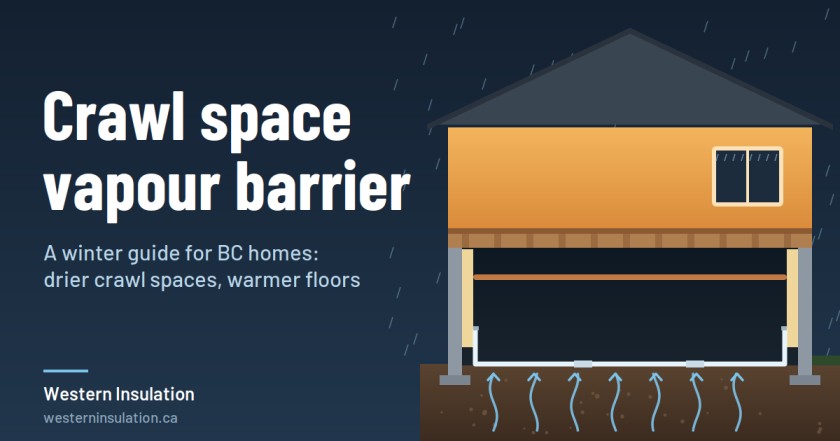
Crawl Space Vapour Barrier in BC: Why Winter Is When It Matters Most
Quick answer: A crawl space vapour barrier is a heavy plastic sheet laid over the dirt floor of a crawl space and sealed up the walls. It stops ground moisture from evaporating into the space under your home. In the Lower Mainland’s wet winters, a sealed, intact vapour barrier keeps the crawl space drier, which helps prevent mould, musty smells, rotting floor framing and cold floors.
Out of sight, out of mind. That’s how most homeowners treat the crawl space, until a musty smell drifts up through the floor or the kitchen tiles feel ice-cold every morning.
From November to March, the ground under Lower Mainland homes stays wet for months. Without a proper barrier, that moisture rises into the crawl space every day, all winter long. This guide explains what a crawl space vapour barrier does, how to tell if yours has failed, what thickness to use, and how it works with insulation to keep your home warm and dry.
What Does a Crawl Space Vapour Barrier Do?
Soil is never completely dry, especially in our climate. Water evaporates from the ground constantly and rises into the crawl space as vapour. In a space with no barrier, or a torn one, that humid air:
- Soaks into floor joists, subfloor and insulation
- Feeds mould and mildew on wood surfaces
- Drifts up into your living space through gaps in the floor
- Attracts pests that like damp, sheltered spaces
A vapour barrier (also called a ground cover or vapour retarder) blocks most of that moisture at the source. It’s one of the simplest and most effective moisture-control upgrades a home with a crawl space can get.
Why Winter Is the Hardest Season on BC Crawl Spaces
Lower Mainland winters are hard on crawl spaces for four reasons:
- The ground stays saturated. Months of rain keep soil moisture at its highest level of the year, so more water vapour is rising into the crawl space every day.
- Cold surfaces cause condensation. When damp crawl space air meets cold foundation walls, pipes and rim joists, it condenses into water, much like the attic condensation in winter that happens above your ceilings.
- Vented crawl spaces pull in wet air. Older homes often have open foundation vents. In winter, they let in cold, damp outdoor air, which chills the floors above and can put plumbing at risk during cold snaps.
- Pests move in. Rodents look for dry, sheltered spots in winter. A torn or missing vapour barrier and loose insulation make an inviting nest.
The result is the classic winter crawl space problem: cold floors, musty smells and moisture damage you can’t see until it’s expensive.
8 Signs Your Crawl Space Vapour Barrier Has Failed
Grab a flashlight and check from the crawl space hatch. Watch for:
- No barrier at all. Exposed dirt is common in older homes.
- Torn, bunched or shifted plastic. Gaps let moisture through.
- Barrier stops at the floor. It should run up the foundation walls and be sealed.
- Standing water or wet soil on top of the plastic. This means water is entering from outside or from a plumbing leak.
- Damp, sagging or fallen insulation between floor joists.
- White fuzz, black spots or dark stains on joists and subfloor.
- A musty smell in rooms above the crawl space.
- Cold floors and high heating bills even when the thermostat is up.
Two or more of these signs usually point to a moisture problem that needs more than a quick patch.
Safety tip: If you see standing water, signs of rodents, or old loose insulation that looks grey-brown and pebbly (possible vermiculite), don’t crawl around in it. Have it assessed by a professional first.
Vapour Barrier vs. Encapsulation vs. Insulation
These three terms get mixed up often. Here’s the difference:
| Vapour Barrier | Encapsulation | Crawlspace Insulation | |
|---|---|---|---|
| What it is | Plastic ground cover over the dirt floor, lapped up the walls | Heavy liner sealed over floor and walls, vents closed, space conditioned or dehumidified | Insulation on the crawlspace walls, rim joists or floor above |
| Main job | Block ground moisture | Turn the crawl space into a dry, sealed space | Stop heat loss and warm up floors |
| Typical materials | 6–10 mil polyethylene | 10–20 mil reinforced liner, tape, sealant | Spray foam, rigid foam, batts |
| Best for | Basic moisture control | Damp crawl spaces, musty homes, storage areas | Cold floors, high heating bills |
| Works alone? | Partly | Best when combined with insulation | Best when the space is dry first |
The key point: These upgrades work best together. Insulation in a wet crawl space can absorb moisture and lose much of its performance. A vapour barrier in an uninsulated crawl space keeps things drier but won’t fix cold floors. Most BC homes get the best result from a vapour barrier plus basement and crawlspace insulation on the walls and rim joists.
What Thickness Should You Use?
Vapour barrier thickness is measured in “mil” (thousandths of an inch).
| Thickness | Durability | Best Use |
|---|---|---|
| 6 mil | Basic; tears easily if crawled on | Minimal-access crawl spaces, tight budgets |
| 10–12 mil | Good balance of strength and cost | Most Lower Mainland homes |
| 15–20 mil (reinforced) | Very tough, resists punctures | Crawl spaces used for storage or with mechanical equipment |
Six mil is often treated as the minimum, but many building-science experts recommend at least 10 mil on the floor because thin plastic tears easily during installation and later maintenance. If anyone will be crawling across the floor to service plumbing, a furnace or a hot water tank, a reinforced 15 to 20 mil liner lasts much longer.
How a Vapour Barrier Is Installed Properly
A barrier that’s just tossed on the dirt won’t do much. A proper installation includes:
- Fixing water problems first. Gutters, grading and drainage issues should be addressed before the barrier goes down. A barrier won’t stop flooding.
- Clearing debris. Sharp rocks, old wood and fallen insulation are removed so they don’t puncture the plastic.
- Laying the barrier with generous overlaps. Seams typically overlap by about 12 inches and are taped.
- Running it up the foundation walls. The barrier is fastened and sealed to the walls rather than stopping at the floor.
- Sealing around piers and pipes. Every penetration is cut and sealed to keep the barrier continuous.
- Insulating walls and rim joists. Spray foam insulation or rigid foam insulation on the walls and rim joists finishes the job and warms the floors above.
If old insulation in the crawl space is wet, mouldy or rodent-damaged, it should be removed first. Our insulation removal service clears it out safely before new work begins.
Do Rebates Cover Crawl Space Work?
BC Hydro and CleanBC insulation rebates are based on the R-value of insulation added, so a vapour barrier on its own doesn’t earn a rebate. Insulating the crawlspace walls can. Crawlspace and basement wall insulation currently earns $0.09 × R-value added × square footage, up to $1,200, when installed by a Home Performance Contractor Network (HPCN) member. Pairing the vapour barrier with wall insulation is often the smartest way to get both moisture control and a rebate.
Rebate rules change, so check the details on our insulation rebates page before you book.
DIY or Professional?
A handy homeowner can lay plastic in a small, dry, easy-to-reach crawl space. But call a professional if:
- The crawl space is damp, has standing water or smells musty
- There’s old insulation, rodent activity or possible vermiculite
- You want the walls and rim joists insulated at the same time
- You want the work to qualify for insulation rebates (DIY insulation isn’t eligible)
- The space is tight, low or hard to move around in safely
Keep Your Floors Warm and Your Crawl Space Dry This Winter
A crawl space vapour barrier is one of the lowest-cost ways to protect your home from moisture. Paired with proper insulation, it can make a noticeable difference to how warm your floors feel this winter.
Western Insulation inspects and insulates crawl spaces across Langley, Surrey, Abbotsford, Maple Ridge and the Lower Mainland. For more ways to prepare, see our winter home insulation guide and our crawlspace insulation guide for Langley homes.
Frequently Asked Questions
Do I need a vapour barrier in my crawl space?
Yes. Almost every crawl space with a dirt floor needs one, especially in the Lower Mainland, where the ground stays wet all winter. Without a barrier, moisture rises from the soil into the crawl space, where it can cause mould, rot, musty smells and cold, damp floors.
What thickness of vapour barrier is best for a crawl space?
For most Lower Mainland homes, a 10 to 12 mil polyethylene barrier is a good balance of durability and cost. A 6 mil barrier tears more easily, while 15 to 20 mil reinforced liners are best for crawl spaces used for storage or with mechanical equipment that needs regular service.
Is a vapour barrier the same as crawl space encapsulation?
No. A vapour barrier covers the dirt floor and laps up the walls to block ground moisture. Encapsulation goes further, sealing the floor and walls with a heavy liner, closing vents and controlling humidity so the crawl space becomes a dry, sealed space.
Should I insulate my crawl space walls or the floor above?
In most BC homes, insulating the crawl space walls and rim joists works better than insulating the floor above. It keeps pipes and ducts on the warm side and pairs well with a vapour barrier. The best choice depends on whether your crawl space is vented, how damp it is and what equipment it contains.
Does a vapour barrier qualify for BC rebates?
A vapour barrier alone doesn’t qualify, because BC Hydro and CleanBC insulation rebates are based on the R-value of insulation added. Insulating crawlspace walls does qualify, at $0.09 × R-value × square footage, up to $1,200, when installed by an HPCN member.
How long does a crawl space vapour barrier last?
A properly installed, sealed vapour barrier can last many years, often 10 to 20 or more. Thicker, reinforced liners last longer, especially in crawl spaces where people move around. Tears, shifting and rodent damage shorten its life, so inspect it every year or two.