The Ultimate Guide to Spray Thermal Insulation: What Experts Won’t Tell You
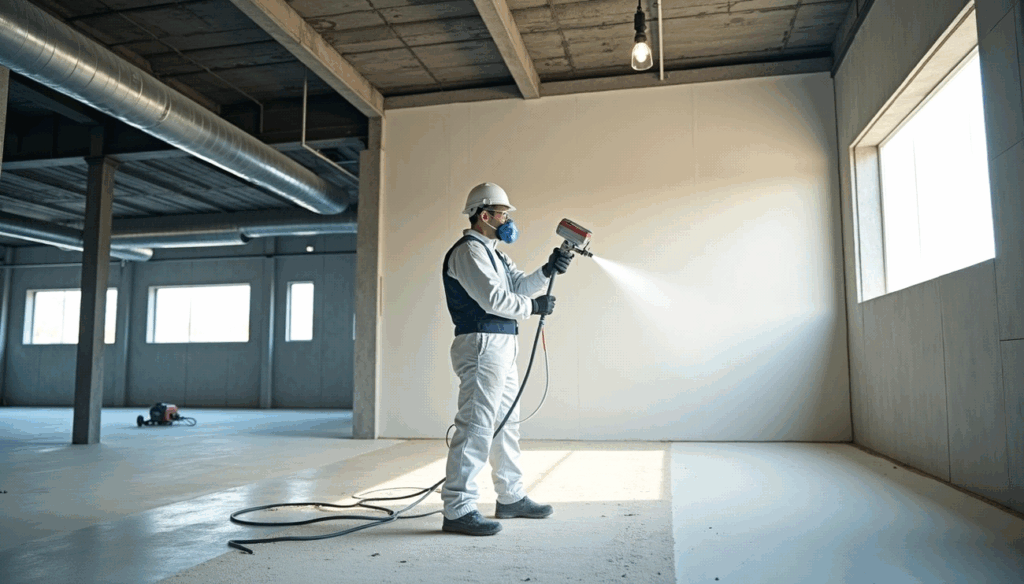
Are your energy bills skyrocketing despite your best efforts? Spray thermal solutions could be just what you need. We identified a glass fiber-based spray-on insulation that addresses both your thermal and acoustic challenges.
Spray foam thermal insulation remains a wise choice for effective home insulation. The spray-on insulation achieves outstanding thermal performance. Its applications typically range from R12 to R20, satisfying relevant building codes. Spray thermal insulation delivers environmental advantages often overlooked by experts. The product is non-hazardous, with each batch incorporating partially recycled material.
This piece will help you understand everything about spray thermal insulation. You’ll learn about its simple composition and the benefits that industry professionals rarely tell you about.
What is Spray Thermal Insulation?
Spray thermal insulation creates a thermal barrier that works well on surfaces. You can find this solution in two main types: open-cell and closed-cell foam. Each type has its own benefits based on what you need.
The closed-cell spray foam has a dense, rigid structure. Its air cells are completely sealed, which gives it an R-value between 5-6.5 per inch. This high-performance material blocks both air and vapor when it’s installed at least 2 inches thick. The strong structure makes it perfect for exterior walls, basements, and places with moisture issues.
Open-cell spray foam is lighter and more flexible with an R-value of about 3.2-3.8 per inch. Though not as dense as closed-cell foam, it does a great job at soundproofing. This type works best inside your home’s walls and attics.
These foams come from a chemical reaction between isocyanate and polyol resin components. The mixture expands 30-60 times more than its liquid volume. This expansion helps the foam fill tiny spaces and creates a smooth insulating barrier.
The installer uses special equipment to spray these liquid components. They mix right at the spray gun’s tip, expand, and then harden. The foam takes the shape of any surface and seals all gaps and cracks completely.
Key Benefits You Might Not Know
Spray foam insulation does more than just control temperature. Most contractors won’t tell you this, but closed-cell spray foam makes your building stronger by adding stiffness to walls and roofs. It also helps resist wind uplift.
The right application of spray thermal insulation creates a strong barrier that keeps allergens and pollutants out. Your family stays protected from outdoor contaminants thanks to an airtight seal that substantially improves indoor air quality.
Sound control is another great benefit of spray foam. Tests show it can cut household noise levels by up to 50%, based on how thick it is and how it’s applied. Open-cell foam works best at soundproofing, which makes it perfect for home theaters or bedrooms.
Modern spray foam comes with fire retardants that slow down burning. Building codes require a 15-minute thermal barrier, usually drywall, between foam and living spaces.
The foam’s ability to resist moisture and mold is remarkable. Closed-cell foam creates a waterproof barrier that stops condensation from building up inside walls. This protects against rot and structural damage. The foam’s inert polymers don’t feed mold, mildew, or bacteria.
These advantages help explain why spray foam insulation keeps working effectively for decades when installed correctly.
Real-World Applications and Performance
Spray thermal insulation runs on a variety of ground settings. Commercial environments use spray foam to create thermal barriers in warehouses, office buildings, and retail spaces that reduce energy bills by up to 30%. Equipment life extends significantly in manufacturing facilities when the temperature is regulated.
The versatility of spray foam shines in industrial applications. Spray foam’s excellent thermal resistance helps oil and gas operations maintain consistent pipeline temperatures. The moisture-resistant properties of spray foam help storage tanks and vessels preserve their content quality.
Cold storage facilities depend on spray foam’s exceptional performance. Its tight seal contains cold air while keeping warm air out and reduces refrigeration system workload. Agricultural buildings get protection against extreme temperatures that safeguard valuable livestock and crops.
The performance numbers tell an impressive story. Commercial roof studies show spray-polyurethane foams keep their physical properties for over 30 years and absorb minimal moisture (0-2%) throughout their lifespan. Wall assembly strength increases by up to 300% with closed-cell spray foam compared to traditional insulation.
Spray foam remains effective in extreme weather conditions at temperatures from -40°F to 200°F. This makes it perfect for climate zones with major seasonal changes, where its air-sealing properties prove most valuable.
Conclusion
Spray thermal insulation is, without doubt, one of the best ways to meet your insulation needs today. In this piece, we’ve learned how open-cell and closed-cell types deliver excellent thermal performance. These benefits are way beyond the reach and influence of basic temperature control.
The results speak for themselves. Closed-cell foam makes your structure stronger and creates a barrier that moisture can’t penetrate. Open-cell foam’s soundproofing abilities are impressive. Both types improve your home’s air quality significantly. They stop allergens and pollutants from entering your living space.
On top of that, spray foam works great almost anywhere. You can use it in commercial buildings, industrial facilities, or farm structures. This amazing insulation helps you save energy and protects your valuable assets from temperature changes.
The best reason to choose spray thermal insulation is its longevity. Unlike regular insulation that breaks down over time, spray foam keeps working for decades. It won’t sag or settle. The original cost might be higher than other options, but you’ll save money through lower energy bills and better structural protection.
Energy efficiency standards keep getting stricter, and spray thermal insulation proves to be future-ready. It creates a smooth barrier that eliminates thermal bridges and air leaks – common problems with regular insulation systems. Your home or building stays comfortable all year with minimal energy use.
People often choose less effective options, but spray thermal insulation deserves a closer look for any construction or renovation project. The detailed benefits – stronger structure, moisture protection, sound reduction, and better thermal performance – are a great way to get started on your next insulation project.