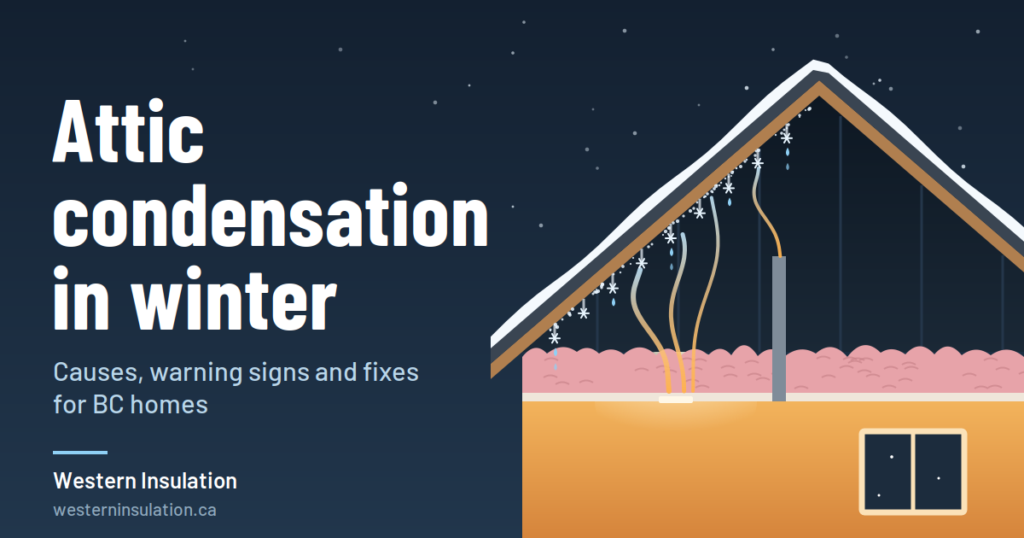
Attic Condensation in Winter: Causes, Warning Signs & How to Fix It in BC Homes
Quick answer: Attic condensation happens when warm, moist air from your living space leaks into a cold attic and turns into water or frost on the roof sheathing, nails, and insulation. In Lower Mainland homes, the main causes are air leaks through the ceiling, bathroom fans venting into the attic, and blocked soffit vents. The lasting fix is to seal air leaks first, then restore ventilation, then top up or replace the insulation, in that order.
Winter in Metro Vancouver and the Fraser Valley isn’t usually brutally cold. It’s long, wet, and grey, with temperatures hovering just above freezing for weeks and a few sharp cold snaps in between. That combination makes attic condensation one of the most common hidden problems in BC homes.
Most homeowners don’t find out until something goes wrong: a brown stain on the bedroom ceiling, a musty smell, or black spots on the roof boards spotted during a renovation. By then, the moisture may have been building for several winters.
This guide explains what causes attic condensation, how to check your own attic in five minutes, and the correct order to fix it so the problem doesn’t come back.
What Is Attic Condensation?
Attic condensation is moisture that forms on cold surfaces inside your attic. It works like the water droplets on a cold glass on a warm day.
In winter, your home is warm and full of moisture from showers, cooking, laundry, and even breathing. A typical family adds several litres of water vapour to indoor air every day. When that warm, humid air finds its way into a cold attic, it hits the underside of the roof deck and the tips of roofing nails, cools down, and releases its moisture as water. On colder nights, it freezes as frost.
A little moisture that dries out quickly isn’t a disaster. The problem is repeated wetting, night after night and winter after winter, without enough time to dry.
Why Lower Mainland Attics Are at Higher Risk
People often assume attic frost is a prairie problem. In some ways, our climate is just as hard on attics:
- Long, damp winters. Outdoor air in the Lower Mainland is often close to saturated from November to March. Ventilation air entering your attic is already damp, so it has less ability to carry moisture away.
- Temperatures near the dew point. Our winters sit right in the range where surfaces repeatedly cross the condensation point, wetting and partially drying over and over.
- Clear-night cooling. On cold, clear nights, roof surfaces can drop below outdoor air temperature. That makes the underside of the sheathing a prime spot for frost.
- Cold snaps. When an arctic outflow hits, frost builds up fast. When the warm rain returns, it all melts at once. Some homeowners call this “attic rain.”
- Older housing stock. Many homes in Langley, Surrey, Burnaby, and Vancouver were built before air sealing became standard. Pot lights, attic hatches, and plumbing stacks often leak warm air straight into the attic.
7 Warning Signs of Attic Condensation
You don’t need to be a contractor to spot most of these. Grab a flashlight and look from the attic hatch on a cold morning.
- Frost or water droplets on roofing nails. The nail tips poking through the roof deck are usually the first place moisture shows.
- Rusty or black nail tips. These are signs of repeated wetting over past winters.
- Dark stains or black spots on roof sheathing. These often indicate mould growth, especially on the north side of the roof.
- Damp, matted, or compressed insulation. Wet insulation loses much of its R-value and stays damp for a long time.
- Water stains on ceilings below the attic. These often appear after a cold snap ends, when frost melts.
- A musty smell from the attic hatch or upstairs rooms.
- Ice dams or icicles along the roof edge during snowy spells. That’s a sign heat is escaping into the attic.
If you spot two or more of these, it’s time for a professional attic inspection. Our article on signs your home needs new insulation covers other red flags.
The Main Causes of Moisture in Your Attic
1. Air leaks from the living space (the number one cause)
In most homes, warm air escapes into the attic through gaps in the ceiling, not through the insulation itself. Common leak points include:
- Pot lights and ceiling light fixtures
- Attic hatches without weatherstripping
- Plumbing vent stacks and chimney chases
- Gaps around electrical wires and top plates of interior walls
- Open soffits above kitchen cabinets and bathroom bulkheads
Because these leaks are usually hidden under insulation, many homeowners never know they’re there.
2. Bathroom and kitchen fans venting into the attic
This is one of the most common problems we find. A bathroom fan that dumps moist air into the attic, or a duct that has disconnected or sagged, pumps water directly where you don’t want it. Every fan should be ducted all the way to the outdoors, and the duct should be insulated.
3. Blocked soffit vents
When insulation is blown or pushed into the eaves without baffles, it can block the soffit vents. Without fresh intake air, moisture has nowhere to go. Attic baffles keep a clear air channel between the insulation and the roof deck.
4. Not enough (or damaged) insulation
Thin, compressed, or patchy insulation lets more heat into the attic. That warm air carries more moisture and creates uneven hot and cold spots on the roof deck, which encourages condensation and ice dams.
5. High indoor humidity
In winter, indoor humidity in the 30 to 50 percent range is a reasonable target for most homes. Drying laundry indoors, long showers without a fan, a broken HRV, or a lot of houseplants can push it higher.
Condensation vs. Roof Leak: How to Tell
| Clue | Likely Condensation | Likely Roof Leak |
|---|---|---|
| When it appears | After cold nights or when a cold snap ends | During or right after heavy rain |
| Where | Spread across large areas, often the north slope | One spot, often near chimneys, vents, or valleys |
| Nails | Frost or rust on many nail tips | Usually limited to the wet area |
| Insulation | Damp across a wide area | Soaked in one localized spot |
| Who to call | Insulation and air sealing contractor | Roofer |
Sometimes it’s both. If you’re not sure, an attic inspection can sort it out before you pay for the wrong repair.
How to Fix Attic Condensation (in the Right Order)
The order matters. Many homeowners add more insulation first, and the problem comes back. Here’s the sequence that works.
Step 1: Fix the moisture sources
Make sure every bathroom, kitchen, and dryer fan vents to the outdoors through a sealed, insulated duct. Repair any disconnected ducts in the attic. Run bathroom fans during showers and for 20 to 30 minutes after.
Step 2: Air seal the attic floor
This is the most important step and the one most often skipped. Seal pot lights (using insulation-contact-rated fixtures or approved covers), plumbing stacks, wire penetrations, top plates, chimney chases, and the attic hatch. Professionals often use spray foam insulation and sealants to close these gaps permanently.
Step 3: Restore ventilation
Install or replace baffles at the eaves so soffit vents stay open, and make sure there’s balanced intake and exhaust. If ventilation needs major roof work, such as new ridge vents, coordinate with a roofer.
Step 4: Remove wet, mouldy, or contaminated insulation
If your insulation has been soaked, compressed, or contaminated by mould or pests, adding new insulation on top just traps the problem. Professional insulation removal with industrial vacuum equipment clears the attic so the air sealing can be done properly. Learn more about attic insulation removal and replacement.
Step 5: Insulate to the right R-value
Once the attic is sealed and dry, bring it up to a modern insulation level. Many BC homes benefit from upgrading to around R-50 or higher. See our insulation R-value guide and blown-in insulation guide for the options, or explore our attic insulation services.
Why this order? Adding insulation without air sealing makes the attic colder while warm, moist air keeps leaking in, and that can actually increase condensation. Seal first, then insulate.
What Not to Do
- Don’t just add more insulation on top. It won’t stop air leaks, and it can make frost worse.
- Don’t lay plastic sheeting over attic insulation. A poorly placed vapour barrier can trap moisture against the ceiling or roof deck.
- Don’t block soffit vents when topping up insulation. Always install baffles first.
- Don’t add extra roof vents without fixing air leaks. More exhaust without enough intake can actually pull more warm indoor air into the attic.
- Don’t ignore mould. Black growth on sheathing should be assessed by a professional. Our insulation and mould prevention guide explains why moisture control matters.
Winter Attic Checklist for BC Homeowners
Before the coldest stretch of winter arrives:
- Check roof nails for frost or rust on a cold morning
- Look for dark stains on the roof sheathing
- Confirm bathroom fans vent outdoors, not into the attic
- Make sure soffit vents aren’t buried under insulation
- Weatherstrip and insulate the attic hatch
- Check insulation depth (most older homes are well below today’s levels)
- Keep indoor humidity in a healthy range (30 to 50 percent is a common target)
- Book a professional attic inspection if you find any problems
For more ways to prepare, read our winter home insulation guide.
Fix the Cause, Not Just the Symptom
Attic condensation won’t fix itself, and every winter it continues, the risk to your roof deck, insulation, and indoor air quality grows. The good news: once air leaks are sealed, ventilation is restored, and insulation is brought up to standard, most attics stay dry for good.
Western Insulation helps homeowners across Langley, Surrey, Vancouver, Burnaby, Abbotsford, and the Lower Mainland diagnose attic moisture problems and fix them in the right order, from air sealing and insulation removal to new attic insulation. You may also qualify for insulation rebates in BC on your upgrade.
Book an attic inspection with our team →
Frequently Asked Questions
Is frost in my attic normal in winter?
A tiny amount of frost on a few nails during a hard cold snap can happen. Widespread frost, dripping water, or frost that returns every cold spell is a sign of air leaks or ventilation problems that should be fixed.
Will adding more insulation stop attic condensation?
Not on its own. Insulation slows heat loss, but it doesn’t stop moist air from leaking into the attic. Air sealing must come first, then insulation.
Can attic condensation cause mould?
Yes. Repeated wetting of the roof sheathing and insulation creates ideal conditions for mould, especially in the Lower Mainland’s long, damp winters.
How do I know if it’s condensation or a roof leak?
Condensation usually appears after cold nights and spreads over large areas, often with frost on many nails. Roof leaks usually show up during heavy rain in one specific spot.
Does wet attic insulation need to be replaced?
Insulation that has been soaked, compressed, or affected by mould usually needs to be removed and replaced. Damp insulation loses much of its R-value and can keep the attic wet.
Who should I call for attic condensation, a roofer or an insulation contractor?
If the cause is air leaks, wet insulation, or blocked soffits, which is the most common situation, an insulation contractor is the right call. If roof vents or the roof itself are damaged, you may also need a roofer.