
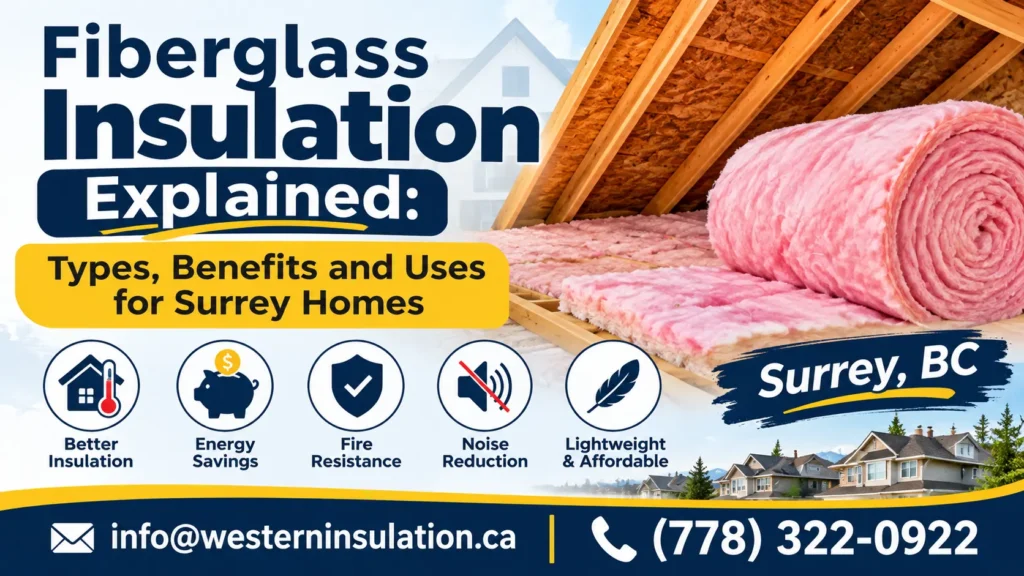
Fiberglass Insulation Explained: Types, Benefits and Uses for Surrey Homes
Fibreglass insulation can be a great choice for home owners in Surrey. It comes in a variety of forms and can be fitted to a range of locations within homes.
By fitting fibreglass insulation to external walls, roofs, lofts and floors, home owners can regulate internal temperatures. There are Different Types of fibreglass insulation, and so knowing the differences can help make smarter choices.
What Is Fiberglass Insulation?
Fibreglass insulation is made from fine glass fibres. This insulative material traps pockets of air, and prevents heat escaping.
Within residential buildings, it is commonly found in two forms:
Fiberglass batts: Pre-cut or continuous sections designed to fit between wall studs, ceiling joists and floor framing.
Blown-in fiberglass: Loose fibres installed using specialized blowing equipment to fill attic spaces and suitable enclosed cavities.
Both options provide thermal resistance. The higher the R-value, the more resistant to heat transfer.
Because fibreglass insulation is light weight, flexible, and available in a range of depths and performances, it is commonly used in domestic properties.
Why consider Fibreglass Insulation in Surrey?
Surrey has cold, damp winters, and warmer summer climates. It is therefore important to install insulation in order to keep your property at the ideal temperature year-round.
There are several reasons that Fibreglass Insulation may be a good choice for home owners in Surrey.
1. Helps Maintain Indoor Temperatures
Fitting fibreglass insulation to walls, roofs and floors can help prevent heat loss from internal spaces during the winter months, and similarly prevent external heat entering through walls in the summer months.
Correctly installed as a full envelope, it can help provide a stable internal temperature.
2. Available in Different Installation Formats
Fibreglass insulation offers flexibility.
Batts can be installed in easily accessible cavities, whereas loose fill can be fitted in large areas of attics. It can also wrap around obstacles like trusses, cabling and others.
As such, home owners can choose the correct type of insulated based on the construction of the cavity.
3. Supports Energy Efficiency
As the insulation reduces heat transfer through the building, less heating and cooling will be required to maintain a comfortable temperature.
The energy efficiency improvements depend on current insulation in the building, air leakage, design, ventilation and heating performance in the building.
4. Provides Additional Sound Absorption
Fibreglass insulation can greatly improve sound absorption in walls, roofs and floors.
It is good to install fibreglass insulation in partition walls, bedrooms and other areas where reducing noise transfer between rooms may be desired.
To improve sound proofing in walls, consideration must be given to the construction of the walls, air tightness and other sound-proofing features.
5. Lightweight and Versatile
Fibreglass insulation is available in a range of densities, depths and R-values. It can be a good choice for a wide range of applications within domestic properties, if the correct product is chosen and installed correctly according to manufacturer guidelines.
What Are the Different Types of Fiberglass Insulation?
Consider the following types to decide which is best for your property.
1. Fiberglass Batt Insulation
Batts are cut (or rolled) pieces of insulation. They can be fitted between standard construction members.
These are commonly used in:
- External walls
- Internal partition walls
- Roof trusses
- Floors
- Basement construction
Batts are a good choice in easily accessible cavities with regular construction sizes.
Care must be taken during installation. Leaving gaps, compressing or fitting batts incorrectly can reduce the effectiveness of the insulation.
Find out more about batts in our guide.
2. Blown-In Fiberglass Insulation
Blown-In fibreglass insulation is made up of loose fibres and is installed using specialist equipment.
As it is loose-filling, it can conform to construction members, cabling and irregularly shaped spaces in attics.
Loose-fill fibreglass is commonly used in:
- Open floor attics
- Adding insulation to attics
- Suitable enclosed walls
- Irregularly shaped or obstructed spaces.
It is a good option for adding extra insulation in existing attics without removing all existing insulation. Existing insulation must be clean, dry and suitable for adding extra insulation.
Learn more about blown-in insulation and how loose-fill materials are installed.
3. Owens Corning ProPink Fiberglass Insulation
ProPink is a range of insulation products offered by Owens Corning.
Products come in a range of forms and R values, depending on the suitable application in the home.
Home owners should consider the thermal rating, application and manufacturer guidelines to determine which product is best for your home.
The correct product depends on the construction of the building, rather than choosing the thickest insulation available.
Where Can Fiberglass Insulation Be Used in a Home?
Depending on the product, fibreglass insulation can be installed in many sections of the home.
External Walls
Fitting insulation to external walls can help prevent heat transfer from inside to outside.
Batts can be installed between stud walls. However care should be taken during installation to ensure there are no gaps around piping, cabling or other obstructions, as it can cause thermal performance issues.
Attic Spaces
Considering insulation on roofs is important to prevent heat escaping.
Depending on the construction of the attic, batts may be a suitable option. However, loose-fill fibreglass is commonly used in open spaces within attics, and to add extra insulation.
Find out more about attic insulation options.
Basement Ceilings and Floor Cavities
Batts can be fitted into suitable flooring constructions and ceiling cavities within basements.
The correct insulation method will depend on whether it is a conditioned space. It will also depend on the position of the air and vapour control layers, moisture levels and local building regulations.
Interior Walls
Fitting batts to partition walls can help reduce sound transfer between rooms.
This can be very useful in bedrooms, home offices and basement suites.
Fiberglass Batt vs. Blown-In Fiberglass: Which Should You Choose?
Both options use fiberglass fibres, but their installation methods and suitable applications differ.
Feature Fiberglass batts Blown-in fiberglass
Material Pre-cut or rolled fibres Loose fibres
Installation Fitted into cavities Applied using blowing equipment
Common applications Walls and floor cavities Attics and suitable cavities
Best suited for Accessible, regular framing Irregular and open spaces
Coverage Requires accurate fitting Conforms to irregular space
Neither format is automatically better for every home.
The right selection depends on the location being insulated, accessibility, existing insulation, required R-value and the condition of the building assembly.
What Should Surrey Homeowners Consider Before Choosing Fiberglass Insulation?
Consider the following factors.
Current Insulation
Check what insulation is currently in place. It may be compressed, damaged, uneven, or inadequate for current requirements.
This will allow you to assess whether it is suitable to be left in place, or if it requires any consideration.
Required R-Value
The R-value determines thermal resistance. The required R-value will vary depending on location and building regulations.
Different insulation requirements are required in attics, external walls and floors. Therefore, do not assume the same depth of insulation is required in all areas within the building.
Moisture & Ventilation
Fibreglass insulation should not be used as a moisture control measure.
Before fitting new insulation, check for any leaking, condensation or ventilation issues and resolve these.
In Surrey, with its damp climate, managing moisture in buildings is very important to ensure they perform well in the long run.
Professional Installation
If fibreglass insulation isn’t fitted correctly, gaps may occur and insulation could be compressed. This can affect ventilation.
A qualified residential insulation contractor in Surrey can help determine the best product and installation method for complex construction.
How Long Does Fiberglass Insulation Last?
With correct installation and protection from moisture and damage, fibreglass insulation can last for a long period of time.
However, over time fibreglass insulation can become damaged due to leaking water, pests, compression or renovations.
If the insulation appears damp, dirty or very damaged it is advised to investigate further, rather than simply adding a layer of new insulation.
Regular maintenance can help ensure a good insulation performance. If leaking issues occur in the roof or plumbing, these should be fixed. Also Read: Insulation Rebates
Frequently Asked Questions About Fiberglass Insulation
Is Fibreglass Insulation suitable in Surrey?
Fibreglass insulation can be a good choice for many applications in Surrey. Both batt and loose-fill options can be used in various areas of the home.
Is fiberglass insulation better than blown-in insulation?
Blown-in fiberglass is itself a type of fiberglass insulation. The difference is primarily the installation format. Batts are suited to accessible framing cavities, while loose-fill products are useful for open and irregular spaces.
Can Fibreglass insulation reduce noise?
Yes, fibreglass insulation can greatly reduce airborne noise in walls and floors. However, soundproofing will depend on construction, air tightness and other materials in the construction.
Do I need to replace Fibreglass insulation?
Not necessarily. If the insulation is dry, clean and undamaged it may still be performing well many years later. However, if it is damp, dirty or very damaged, replacement may be required.
Can I install Fibreglass insulation over existing insulation in my attic?
In some cases it may be possible. If the existing insulation is in good condition (clean and dry), extra insulation may be added. First make sure there are no issues with moisture, air leakage and ventilation in the attic.
What type of Fibreglass Insulation is best for walls?
Batt insulation is commonly used in accessible wall cavities. It can be bought in the correct sizes to fit regular construction. R-values and sizes depend on the wall construction.
Conclusion
Fibreglass insulation is a very versatile insulation material, and can be used in many areas of a home to improve thermal efficiency and comfort.
Whether you are looking to install batt insulation in walls, loose-fill in the attic, or in floor constructions, choosing the correct product and fitting it correctly is very important.
Understanding the Different Types of insulation options can help make informed decisions as a homeowner in Surrey.
We offer a range of insulation solutions (including batts, loose fill and attic insulation) for properties in Surrey and the Lower Mainland.
If you are considering upgrading your insulation, find out more or get in touch with us to find the best options for your property.